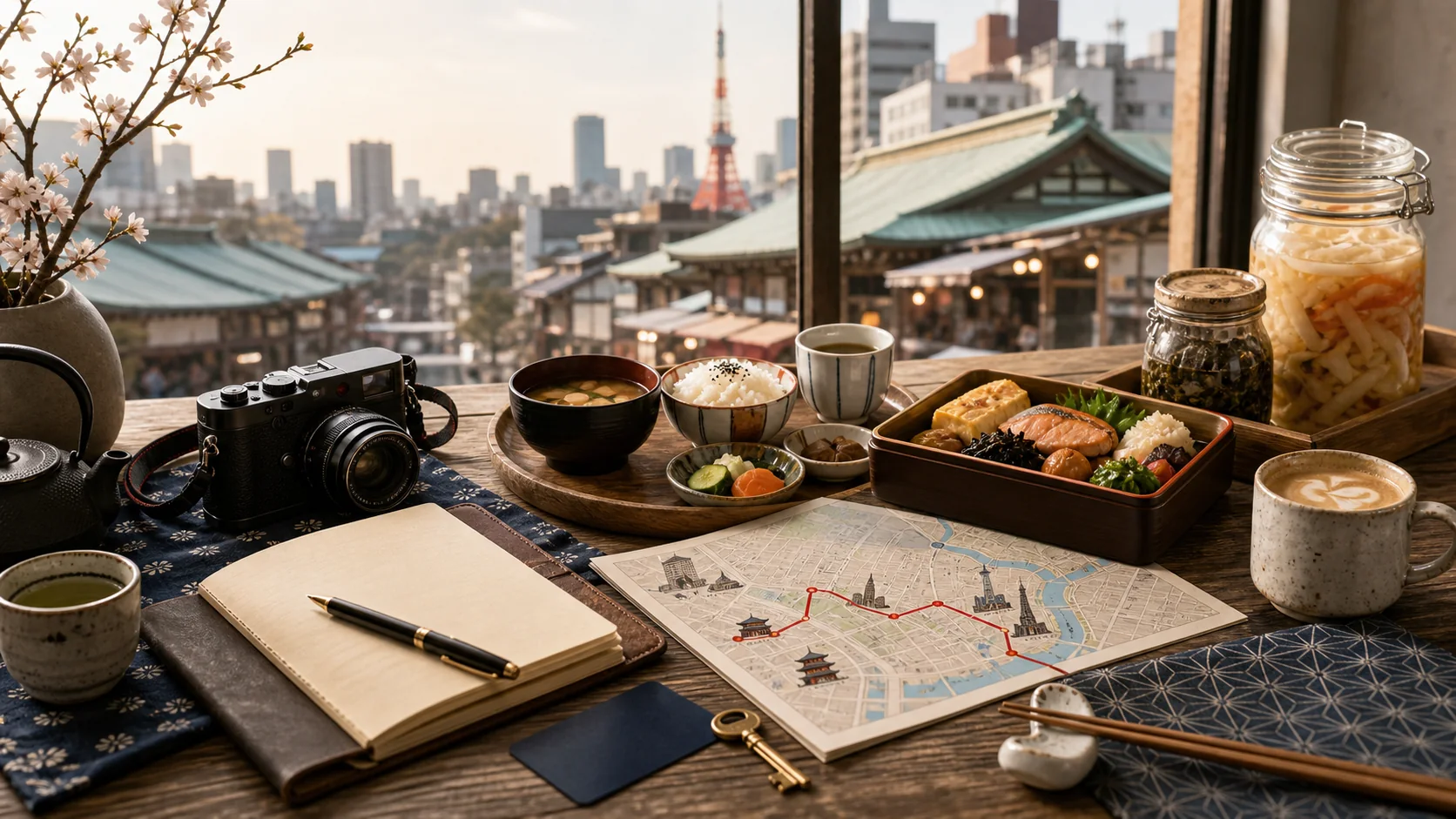
Tokyo cooking class and Tokyo food tour are big, practical search intents because travelers know they want food, but not what kind of food day they can actually handle. The better first full day is not to eat everything. It is to choose whether Tokyo should teach your hands, your route, or your pace.
- Choose a Tokyo cooking class when you want technique, a seated rhythm, and one finished memory; choose a food tour when you need orientation and a simpler first route.
- Tsukiji-style market walking is useful early in the day, but Tokyo food planning gets better when one market route does not become a whole-city crawl.
- The stronger Learn-rest rhythm is one Guided Try, one soft tea or coffee reset, and one clean exit before the first full day becomes too dense.
Tokyo food search is broad because the city is too easy to over-open
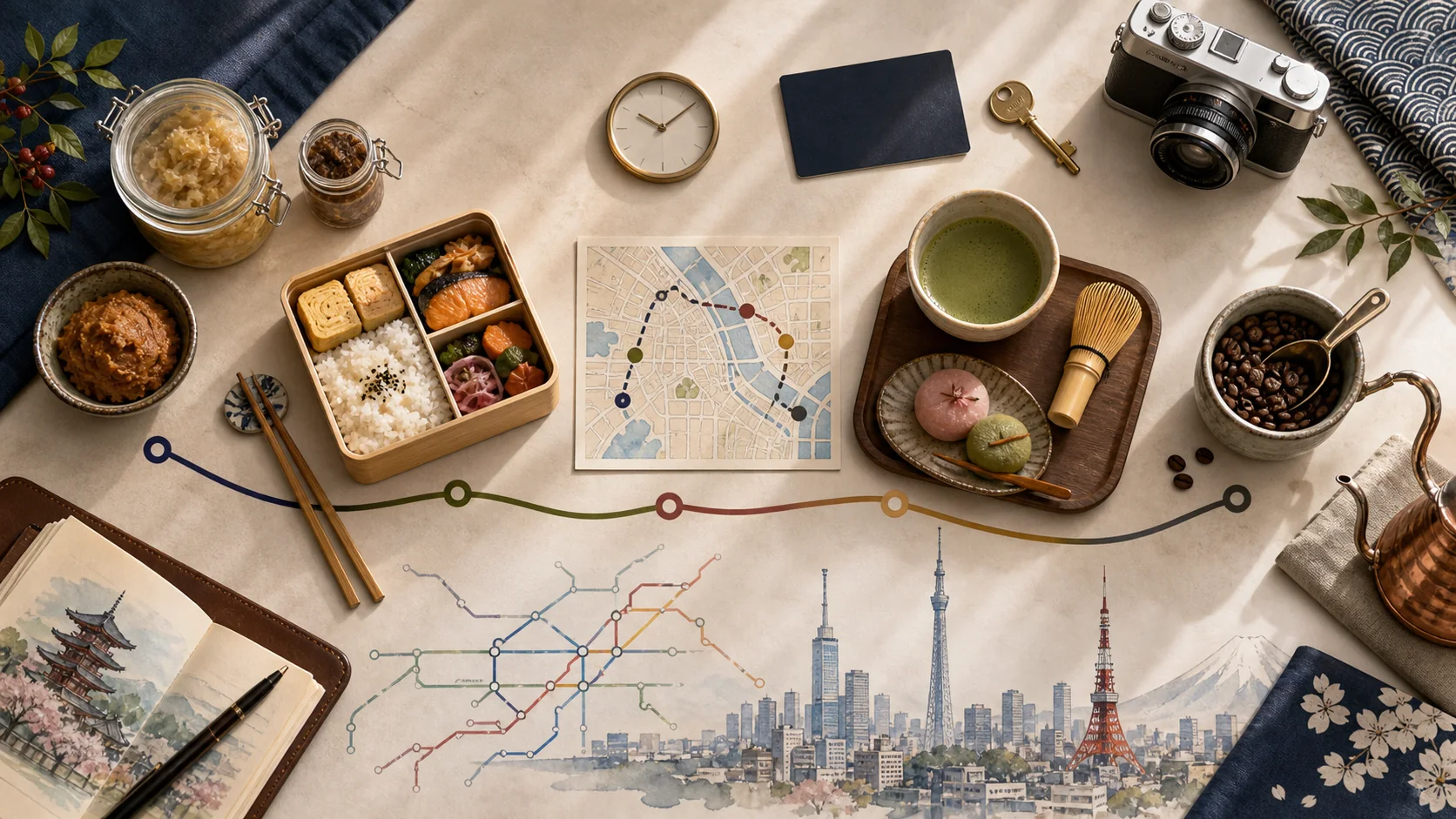
Tokyo cooking class and Tokyo food tour are high-demand keywords for a simple reason: travelers can feel the food opportunity before they can edit it. Sushi, ramen, markets, depachika, kissaten coffee, fermentation, bento, wagashi, izakaya, and neighborhood snacks all sound like they belong on day one.
That is exactly why the first full day needs a decision. A food city is not improved by a food sprint. Tokyo works better when one food anchor teaches the rest of the day how to move.
Cooking class if you want technique, food tour if you want orientation
A Tokyo cooking class is strongest when the trip needs a Guided Try. Fermentation, miso, bento, rice, stock, pickles, or a kitchen table gives you something to understand with your hands. It also solves a practical problem: you are not choosing from a thousand restaurants while still learning the city.
A Tokyo food tour is stronger when the city still feels unreadable. GO TOKYO's official food and dining material makes clear how wide the city's food layer is, and Tsukiji Outer Market remains an easy food-walk reference point for first-time visitors. A compact route can turn that width into usable vocabulary.
Keep the first food route smaller than Tokyo
The temptation is to make a food route that proves you came prepared: market in the morning, sushi nearby, coffee in another ward, sweets in a third, dinner somewhere famous. That plan may look efficient on a map. It rarely feels kind on the ground.
For a first full day, stay compact. If the market is the anchor, let the route stay market-led. If the class is the anchor, let it be the main event. Tokyo rewards attention more than coverage.
Use tea or coffee as the reset, not another task
Tokyo's softer food layer is one of its best planning tools. Tea sweets, kissaten coffee, a quiet counter, or a short tasting stop can keep the day local without making it heavier.
That reset matters because Tokyo can keep offering better options forever. The Learncation OK move is not to win the city. It is to make the first full day useful enough that the second day becomes easier.
5 Tokyo Food Anchors for a First Full Day
These are planning anchors, not fixed operating details. Official GO TOKYO/JNTO sources were checked on May 21, 2026, but market hours, class schedules, meeting points, routes, weather, and transit can change. Confirm live details before building the day around one stop.
1. Tokyo Fermentation Pantry Class
2. Tokyo Bento Balance Lab
3. Tokyo Flavor Counter
4. Tokyo Tea Sweets Counter
5. Tokyo Coffee Roasting Lab
Common Questions
A few direct answers for planning the page in real life.
Should I choose a Tokyo cooking class or a Tokyo food tour?
Choose a Tokyo cooking class if you want hands-on technique, a seated rhythm, and a food memory you can finish. Choose a Tokyo food tour if you want neighborhood orientation, market context, and less decision-making on the first full day. The best choice depends on appetite, walking tolerance, language comfort, and how much energy you want to spend navigating.
Is a Tokyo food tour worth it on a first full day?
It can be worth it when the route is compact and the guide helps you understand food vocabulary, ordering rhythm, and neighborhood context. It is less useful if it becomes a long multi-area crawl. On a first full day, pick one food district or market area and leave room for rest.
What is the best Tokyo cooking class for a first trip?
For a first trip, the best Tokyo cooking class is usually practical and not too long: fermentation, miso, bento balance, sushi basics, or a home-style kitchen table. It should give the day a center without consuming the whole day.
How do I avoid overplanning Tokyo food?
Choose one food anchor first, then one reset. A cooking class plus a tea or coffee stop is enough. A market walk plus a short tasting counter is enough. Save extra ideas to Maybe List or Trip Draft instead of adding them to the same day.
- GO TOKYO - Drinking and DiningOfficial Tokyo tourism source used for broad Tokyo food and dining context.
- GO TOKYO - Tsukiji Outer MarketOfficial Tokyo tourism source used for market-area context and first-time food-walk framing.
- JNTO - Sushi in JapanJapan National Tourism Organization source used for sushi and Japanese food-culture context.