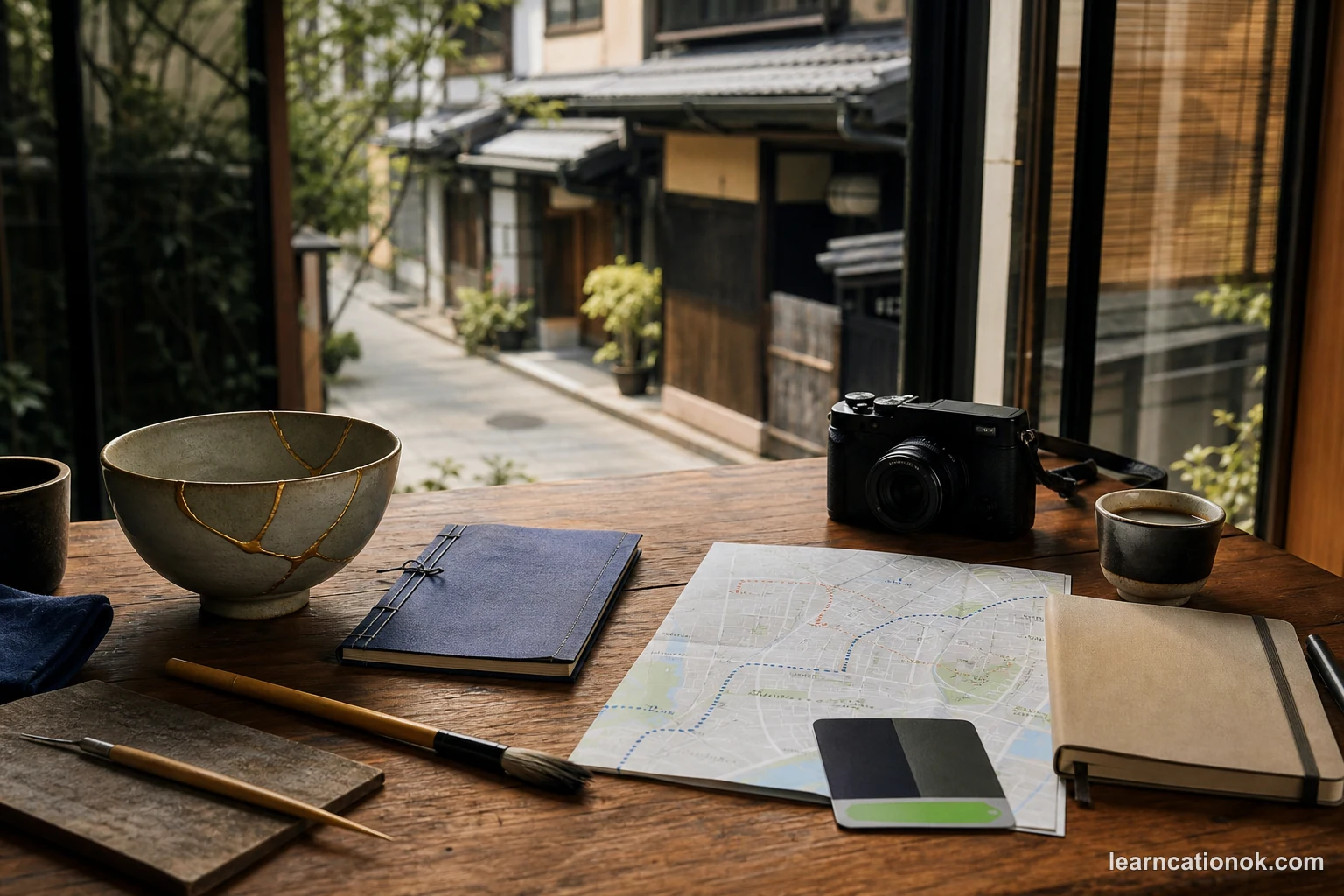
Tokyo is easier to plan when you choose the shape of the first experience before choosing the famous neighborhood. A workshop gives you a table, a task, and a finished memory. A guided tour gives you context, route confidence, and someone else holding the map.
- Choose a workshop when you want one quiet task, hands-on learning, and a memory you can name.
- Choose a guided tour when Tokyo still feels unreadable and you need neighborhood context, movement, and language support.
- Use a hybrid when the day needs both: one guided food or craft route, then one soft reset nearby instead of a second big booking.
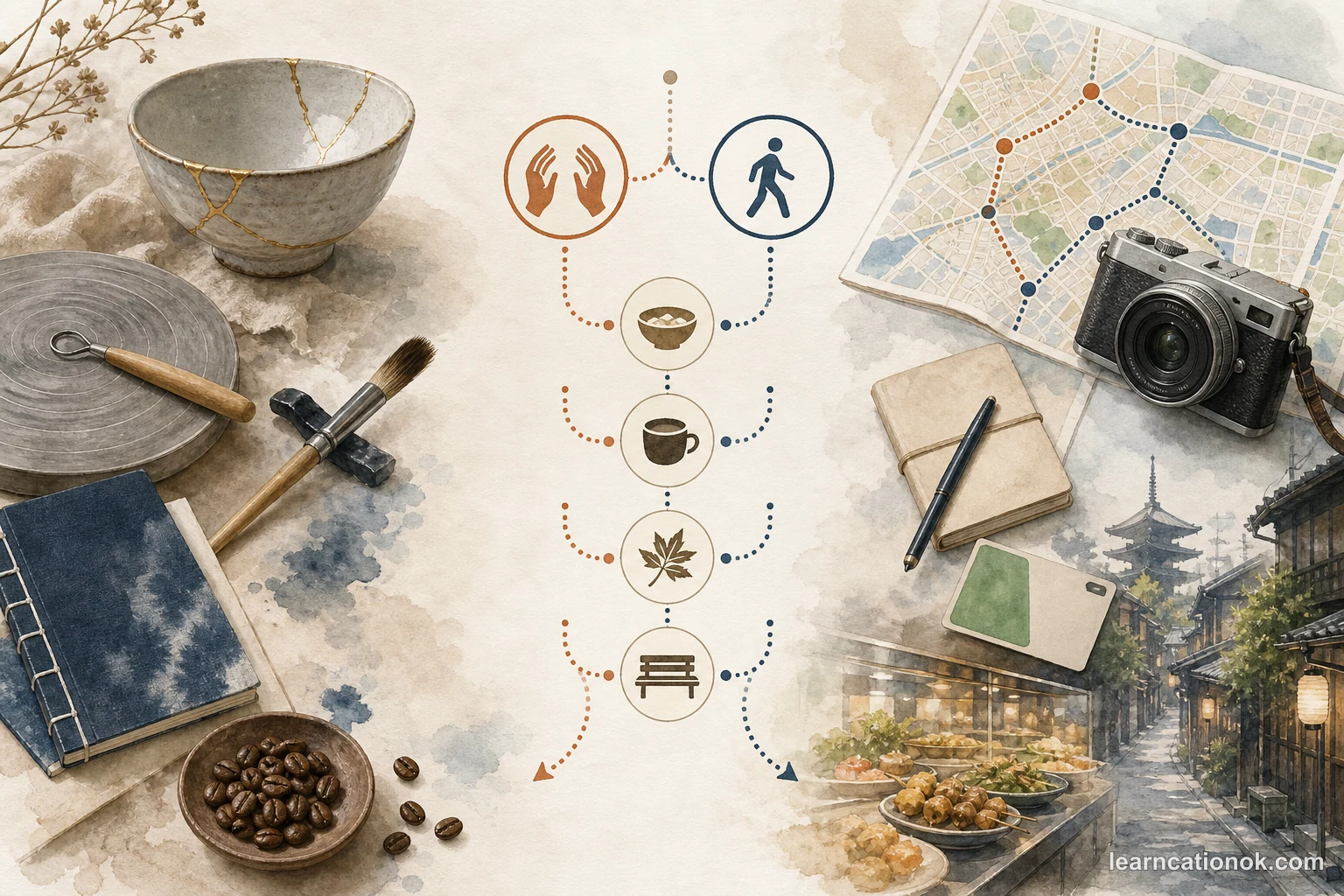
First choose the format, then choose the place
The first Tokyo search often starts with neighborhoods: Asakusa, Shinjuku, Yanaka, Tsukiji, Kiyosumi-Shirakawa, Ginza. That can work, but it also makes the city feel bigger before it becomes clearer. A calmer first move is to choose the format of the experience.
A workshop says: sit down, learn one thing, use your hands, and let the object or technique carry the memory. A guided tour says: move through a route, borrow local context, and let someone else explain what matters while you are still orienting.
Neither is more authentic. They solve different kinds of traveler friction. The workshop solves scattered attention. The guided tour solves unreadable space.
Choose a workshop when you want Tokyo to slow down
Tokyo's craft material is strong because the city still has living workshop culture, not only display cases. GO TOKYO's traditional craft guide points travelers toward experiences like kintsugi and washi, while TOKYO Teshigoto frames craft as something best understood through direct hands-on interaction.
That makes a workshop a strong first experience when you want a day to become smaller in a good way. Kintsugi gives repair and patience. Pottery gives touch and pressure. Coffee gives smell, taste, and calibration. Brush, paper, notebook, and textile sessions give quiet focus with a portable result.
The practical rule is simple: reserve ahead, confirm the meeting point, check language support, and leave one nearby reset. A workshop is not a whole Tokyo itinerary. It is the table that lets the rest of the day breathe.
Choose a guided tour when the city still feels unreadable
A guided tour is most useful before the traveler has mental landmarks. GO TOKYO's volunteer guide material shows how tour routes can use walking and public transport, cover several themes, and require reservation timing for many routes. That structure matters when Tokyo still feels like a set of disconnected station names.
Tours also help mixed groups. One person may want food, another wants shrines, another wants design, and another simply wants not to make every navigation decision. A guide can give the group one shared layer before each traveler chooses a more specific workshop or tasting later.
The tradeoff is energy. A route can include outdoor walking, summer heat, station transfers, and multiple stops. If you are already tired, the better guide experience may be shorter, neighborhood-specific, or built around one route rather than a maximal city overview.
Use food and neighborhoods as the bridge
Food experiences often sit between workshop and tour. A market-flavored counter, cooking table, or tasting walk can give you guided context without making the day feel like a lecture. Tsukiji is useful for this decision because the outer market is still active and food-forward, while also being route-heavy enough to benefit from context.
Neighborhoods can work the same way. Yanaka and Nezu are strong when you want old Tokyo, narrow lanes, small shops, art, and a slower walk. Kiyosumi-Shirakawa is strong when coffee, gardens, and contemporary art make the city feel quieter after a sensory workshop.
If the question is really 'I want Tokyo, but not a crowded checklist,' choose one food or neighborhood anchor and stop pretending the first day needs to prove anything.
Build the day around one main decision
The most common mistake is trying to make the first Tokyo experience answer every desire at once. Workshop plus guide plus famous district plus night plan sounds efficient in a browser tab and can feel thin on the ground.
A better day has one main decision and one backup. Workshop first, then cafe or garden. Guided route first, then easy meal. Food walk first, then quiet station-area reset. Put the second beautiful option in Maybe List instead of turning it into pressure.
Tokyo will still be there tomorrow. The first experience should make the city easier to read, not make you feel behind before lunch.
5 Tokyo First-Experience Anchors
These are planning anchors, not fixed operating details. Official Tokyo sources were checked on June 6, 2026, but workshop schedules, guide availability, reservation rules, language support, meeting points, market conditions, weather, walking distance, and transit can change. Confirm live details before building the day around one stop.
1. Tokyo Kintsugi Workshop
2. Shitamachi Pottery Wheel Session
3. Tokyo Coffee Roasting Lab
4. Tokyo Flavor Counter
5. Yanaka Brush Script Studio
Common Questions
A few direct answers for planning the page in real life.
Should I book a Tokyo workshop or a guided tour first?
Book a workshop first if you already know the kind of attention you want: repair, clay, coffee, food, brush, paper, or another hands-on task. Book a guided tour first if your main stress is navigation, neighborhood context, etiquette, language, or deciding what Tokyo is even asking you to notice.
Are Tokyo workshops good for first-time visitors?
Yes, Tokyo workshops can work well for first-time visitors when the meeting point is clear and the rest of the day is light. Kintsugi, pottery, coffee, brush, paper, food, and small craft sessions give the day one stable center without asking you to decode the whole city at once.
When is a guided tour better than a workshop in Tokyo?
A guided tour is better when you want someone to connect places, explain context, manage the route, or make a busy district feel readable. It is also better when the group includes travelers with different interests and everyone needs a shared first layer before splitting into specific experiences.
Can I combine a Tokyo workshop and guided tour in one day?
You can, but keep the day simple. Pair one morning guided route with one short afternoon workshop, or one workshop with a nearby soft reset. Avoid stacking a long walking tour, a long studio class, and a famous evening stop unless your energy is clearly still strong.
- GO TOKYO - Tour Guide Services by Tokyo Volunteer GuidesOfficial Tokyo tourism source checked on June 6, 2026 for current volunteer guide routes, reservation timing, group size, walking, and summer comfort notes.
- GO TOKYO - Tokyo Volunteer GuidesOfficial Tokyo tourism source checked on June 6, 2026 for street-based tourist information and guided-tour context in major districts.
- GO TOKYO - Support Tradition Through Japanese CraftsOfficial Tokyo tourism source checked on June 6, 2026 for workshop reservation caveats and traditional craft context, including kintsugi and washi.
- TOKYO Teshigoto - WorkshopsTokyo Metropolitan Small and Medium Enterprise Support Center source checked on June 6, 2026 for hands-on traditional craft workshop framing.
- GO TOKYO - Yanaka and NezuOfficial Tokyo tourism source checked on June 6, 2026 for slower old-neighborhood context, retro shopping streets, art, and walkable reset planning.
- GO TOKYO - Kiyosumi ShirakawaOfficial Tokyo tourism source checked on June 6, 2026 for coffee, gardens, art, and a quieter reset route after a sensory workshop.
- GO TOKYO - Tsukiji Outer MarketOfficial Tokyo tourism source checked on June 6, 2026 for food-market context, early-day rhythm, and route-planning caveats around Tsukiji.