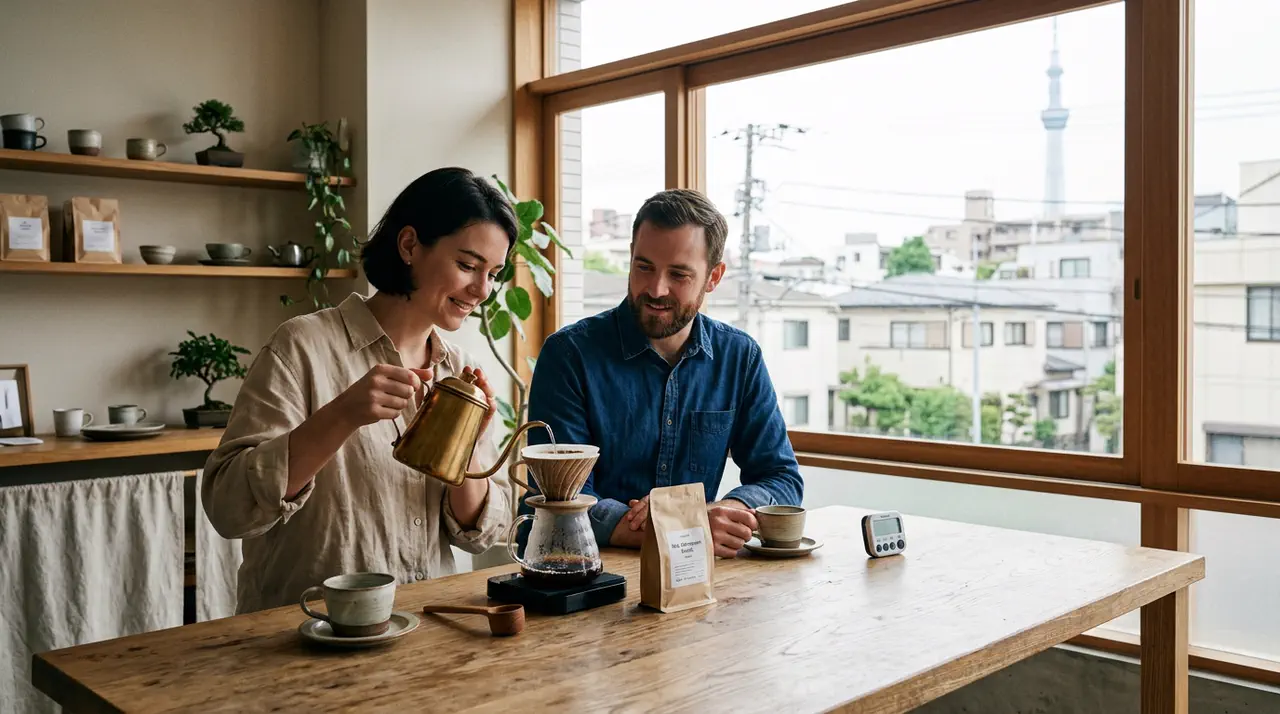
Most first-time Tokyo itineraries make the same mistake: they put the most demanding experience on the arrival day. A better Tokyo day uses one hands-on block as the anchor, leaves air around it, and saves the most social finish for later.
- Do not put your deepest class on arrival day.
- One tactile class beats three shallow stops in Tokyo.
- The best social moment usually comes after the learning, not before it.
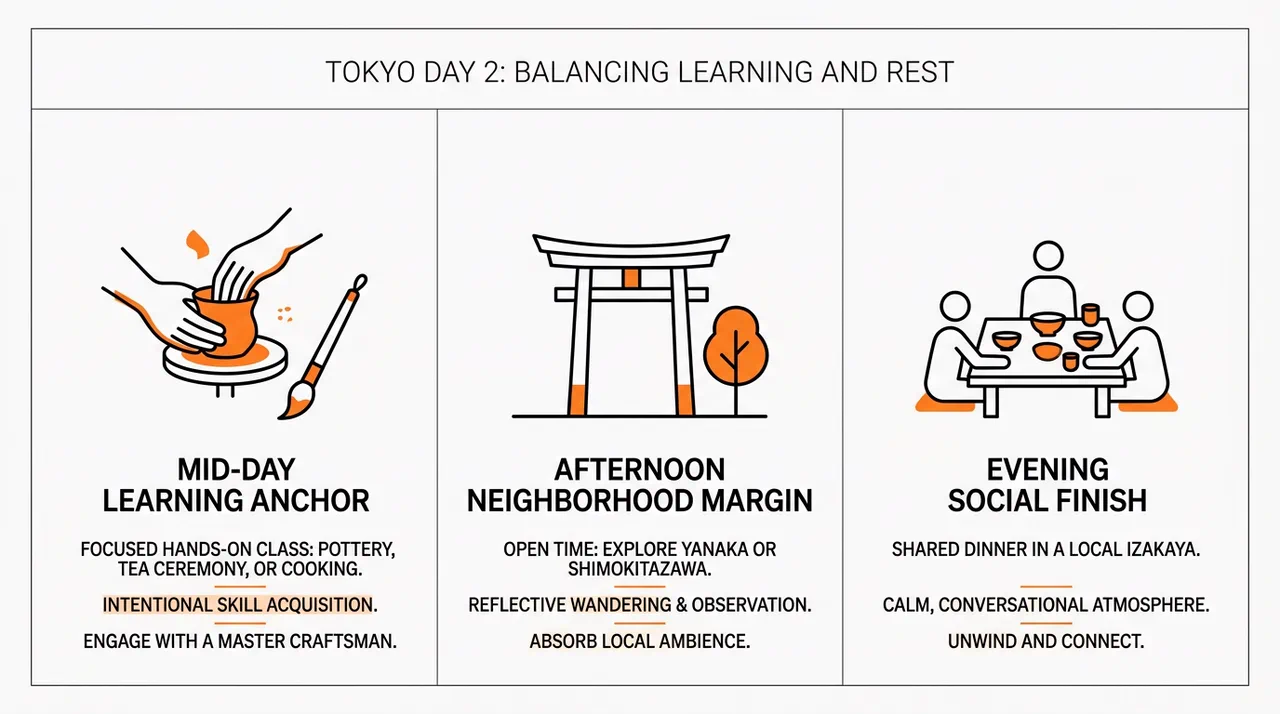
The common Tokyo mistake is front-loading the trip
Tokyo makes people want to prove they are using the city well from the first hour. That usually leads to a packed arrival day, a class that lands too early, and a city that feels more operational than exciting.
Day 2 is better because Tokyo already feels usable by then. You know the trains a little better, your body is less defensive, and a focused experience can finally feel chosen instead of forced.
Use one hands-on block to give the day a center
The best Tokyo rhythm is usually one real making or skill-building block in the middle of the day. Cooking, coffee, craft, or design-led sessions work because they give the city a center without turning the whole day into a performance.
The mistake is adding too many “good enough” stops around that class. Tokyo does not need more volume. It needs one experience that earns the day, then enough margin to let the rest of the city breathe.
Let the city widen after the class
After the learning block, Tokyo is best used lightly. A quieter cafe, a design store, an easy neighborhood walk, or one well-timed dinner works better than another ambitious activity.
That is also when the social layer becomes strongest. The better Tokyo post usually comes from the finish: plated food, evening light, or a calmer second setting after you already did something real.