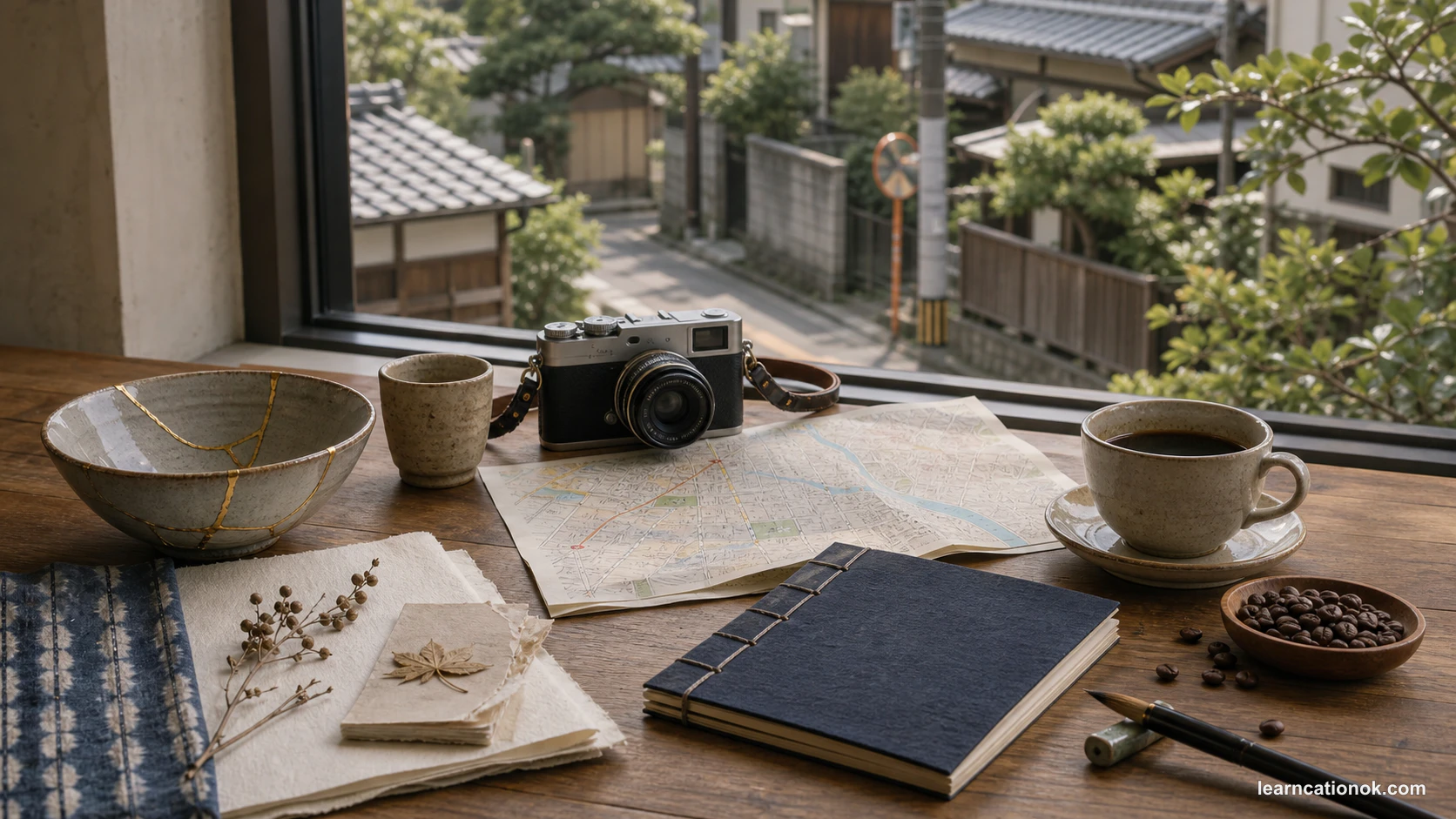
Tokyo creative workshops are strongest when they give the afternoon one clear table. The point is not to collect crafts across the rail map. It is to make one small thing, then let the city get quieter around it.
- Choose the workshop by the kind of attention you have: repair, clay, taste, brush, or paper.
- Keep the reset close. A craft table plus a nearby cafe, garden, old street, or gallery is enough for a calm Tokyo afternoon.
- Save the second workshop to Maybe List. Tokyo gets better when the made object has room to become the memory.
Tokyo workshop search can get too wide too quickly
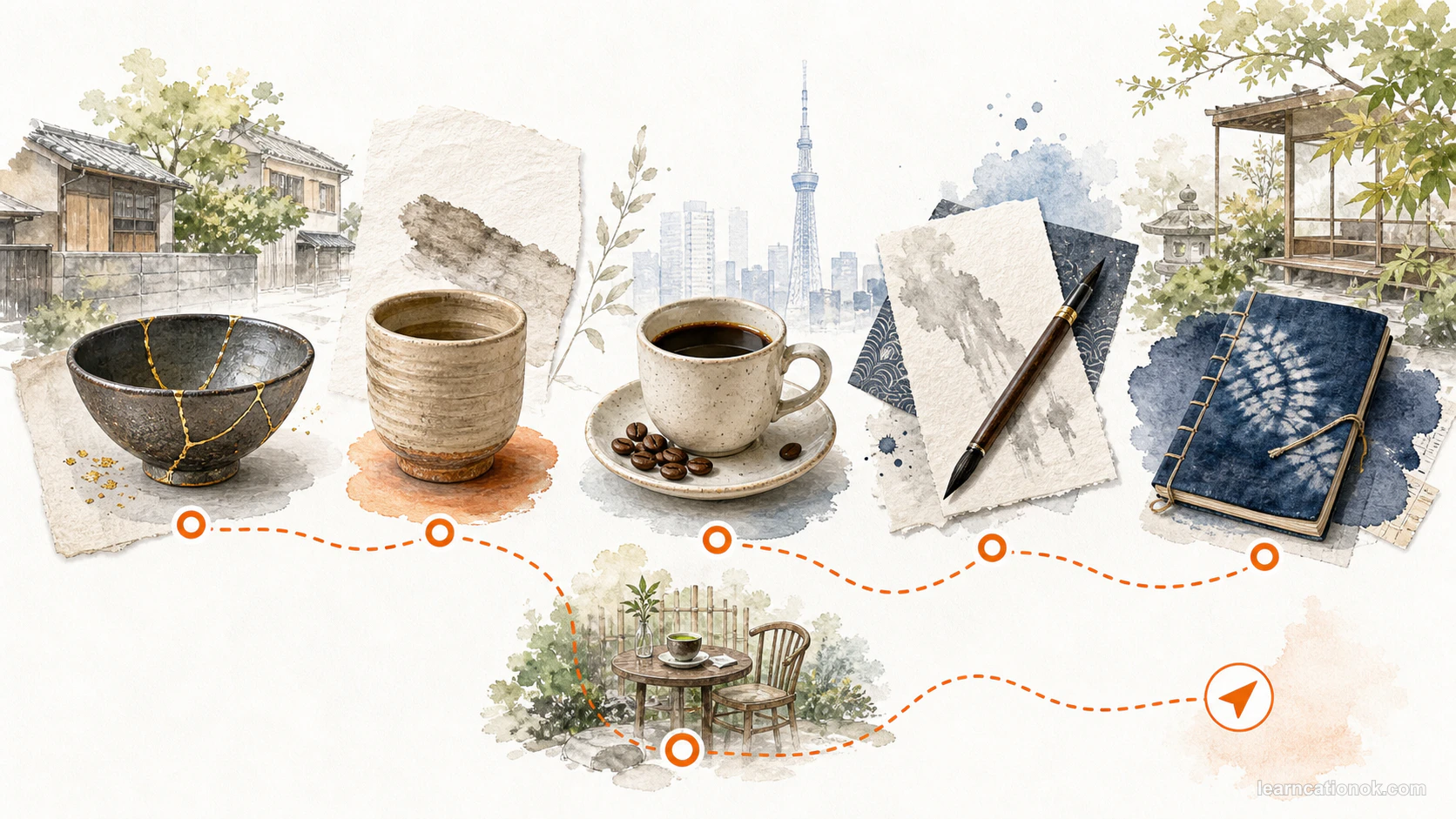
Creative workshops in Tokyo sound easy to choose until every option opens another version of the city. Kintsugi feels thoughtful, pottery feels tactile, coffee feels modern, brush work feels quiet, and paper or dyeing feels like a useful object you can actually carry home.
That is the good problem. The weaker move is turning the afternoon into a workshop crawl. A Tokyo creative day should not ask how many handmade things can fit. It should ask which one made thing will help the city slow down.
For Learncation OK, the workshop is the anchor. The cafe, garden, lane, gallery, or old-neighborhood walk is the soft reset. Anything after that belongs in Maybe List unless the day still has real energy.
Choose the task before choosing the neighborhood
Start with the kind of attention your body can hold. Kintsugi is good when repair, patience, and quiet focus sound right. Pottery is better when you want clay, pressure, and a more physical maker rhythm. Coffee works when taste and calibration feel easier than making a souvenir.
Brush, calligraphy, washi, dyeing, and notebook-style paper craft suit travelers who want a smaller object and a softer social layer. They give the day visible proof without making the phone the reason for the plan.
GO TOKYO's craft material is useful here because it shows Tokyo crafts as living workshop culture, not only museum display. The city can teach through hands, tools, repetition, and reservation-only studio time.
Use one table, then one nearby reset
The Learn-rest rhythm is simple: Guided Try first, Soft Reset second. After a pottery wheel, do not rush across town for another famous stop. After a coffee lab, sit near Kiyosumi-Shirakawa or add one quiet garden or art pause. After kintsugi, let the repair logic stay with you instead of burying it under another plan.
Kiyosumi-Shirakawa is useful for this because GO TOKYO frames the area through coffee, art, gardens, and Edo-period texture. Yanaka and Nezu are useful because they make Tokyo feel slower and older without asking for a hard sightseeing route.
The reset should not compete with the workshop. It should make the workshop easier to remember.
Paper, dyeing, and brush work need fewer promises
Small craft can be more satisfying than a large plan because it does not ask the traveler to perform Tokyo. A brush line, a dyed cloth, a paper texture, or a notebook can hold the afternoon without turning it into a whole cultural thesis.
The Kanda River dyeing material is a good reminder that some of Tokyo's craft stories live in ordinary neighborhoods, not only postcard districts. That makes them strong for travelers who want the city to feel specific but not crowded.
The practical rule is to confirm reservation windows, meeting points, language support, shipping or pickup details, and drying or finishing times before treating any workshop as fixed.
Save the second beautiful craft
Tokyo will almost always offer a second beautiful craft within five minutes of searching. That does not mean it belongs in the same day. Two workshops can sound efficient online and feel strangely flattened on the ground.
Put the second option in Maybe List or Trip Draft. If the first workshop gives the day a clear center, the second one is probably better tomorrow, on a rainy day, or when the city has become easier to read.
A good Tokyo creative afternoon leaves you with one object, one technique, one softer place nearby, and enough attention to still notice the city on the way back.
5 Tokyo Creative Workshop Anchors
These are planning anchors, not fixed operating details. Official GO TOKYO sources were checked on June 4, 2026, but workshop schedules, reservation rules, language support, meeting points, finishing or shipping details, weather, and transit can change. Confirm live details before building the day around one stop.
1. Tokyo Kintsugi Workshop
2. Shitamachi Pottery Wheel Session
3. Tokyo Coffee Roasting Lab
4. Brush, Calligraphy, or Small Paper Studio
5. Dye, Textile, or Notebook Craft Session
Common Questions
A few direct answers for planning the page in real life.
What creative workshops are good for travelers in Tokyo?
Good Tokyo creative workshops include kintsugi, pottery, coffee roasting or tasting, brush or calligraphy sessions, washi paper, dyeing, textile, and small object-making classes. The best choice depends on whether you want quiet focus, tactile making, taste, or a portable object.
Should I choose a Tokyo workshop or a guided tour?
Choose a Tokyo workshop when you want one focused table, hands-on learning, and a finished memory. Choose a guided tour when the city still feels unreadable and you need neighborhood context first. A workshop works better for a calm afternoon; a tour works better for orientation.
Are Tokyo creative workshops good for solo travelers?
Yes. Kintsugi, pottery, coffee, brush, and paper workshops can work well solo because the activity gives the hour structure without forcing a highly social day. Solo travelers should choose a clear meeting point and leave an easy reset nearby.
How do I avoid overplanning a Tokyo workshop day?
Start with one workshop, then choose one nearby reset. Do not stack a second studio, a second district, and a famous evening stop unless your energy is clearly still there. Save extra ideas to Maybe List or Trip Draft.
- GO TOKYO - Craftsmanship in TokyoOfficial Tokyo tourism source checked on June 4, 2026 for current craft-workshop framing and reservation caveats.
- GO TOKYO - Support Tradition Through Japanese CraftsOfficial Tokyo tourism source checked on June 4, 2026 for kintsugi, washi, bonsai, and traditional craft context.
- GO TOKYO - Dyeing Workshops of the Kanda RiverOfficial Tokyo tourism source checked on June 4, 2026 for dyeing workshop and Kanda River craft-neighborhood context.
- GO TOKYO - Kiyosumi ShirakawaOfficial Tokyo tourism source checked on June 4, 2026 for coffee, art, garden, and Kiyosumi-Shirakawa reset context.
- GO TOKYO - Yanaka and NezuOfficial Tokyo tourism source checked on June 4, 2026 for slower old-neighborhood planning context.