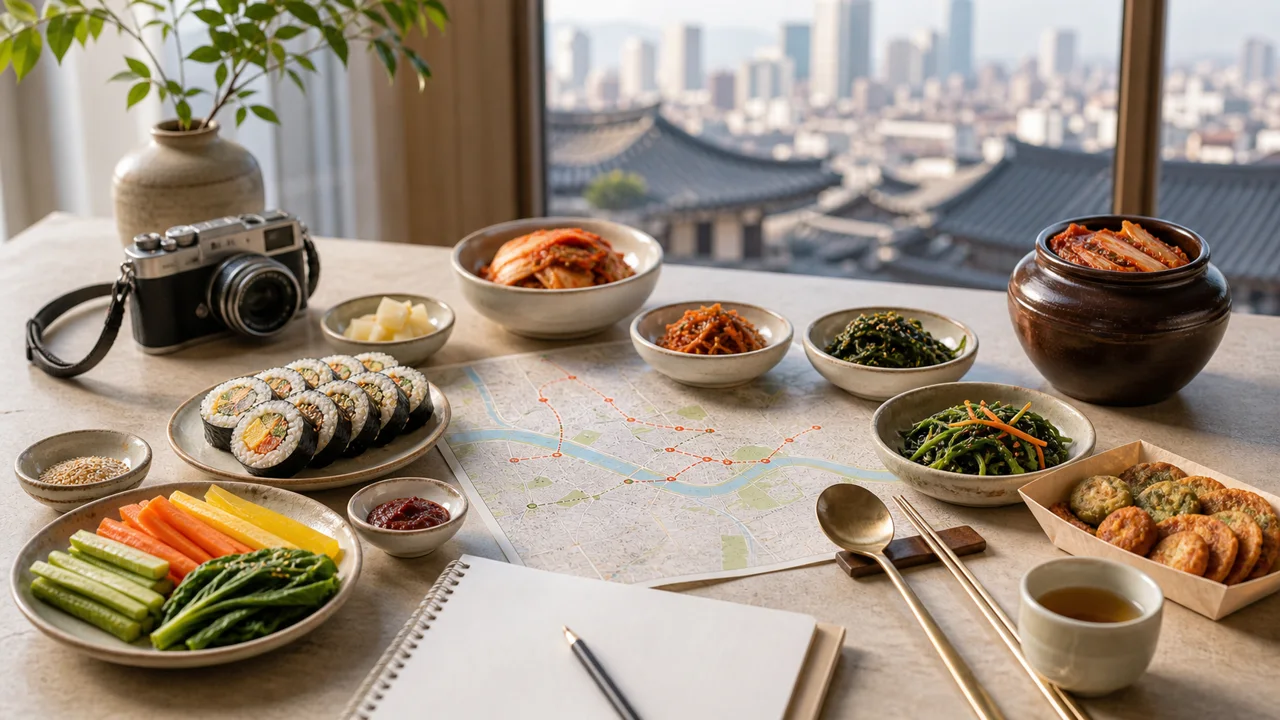
Seoul cooking class and Seoul food tour are practical search queries because travelers know Korean food is a strong entry point, but they do not always know whether day one should be hands-on, guided, social, or quiet. The cleaner move is to choose one food anchor, then let the rest of the city stay editable.
- Choose a Korean cooking class in Seoul when you want technique, a hosted table, and one finished memory; choose a Seoul food tour when you need market orientation and less first-day decision work.
- Gwangjang and Mangwon are useful food-tour references, but a first day gets better when one market route does not become a whole-city snack crawl.
- The stronger Learn-rest rhythm is one Guided Try, one market or tea reset, and one clean exit before Seoul's food list gets too wide.
Seoul food search is broad because Korean food already feels familiar
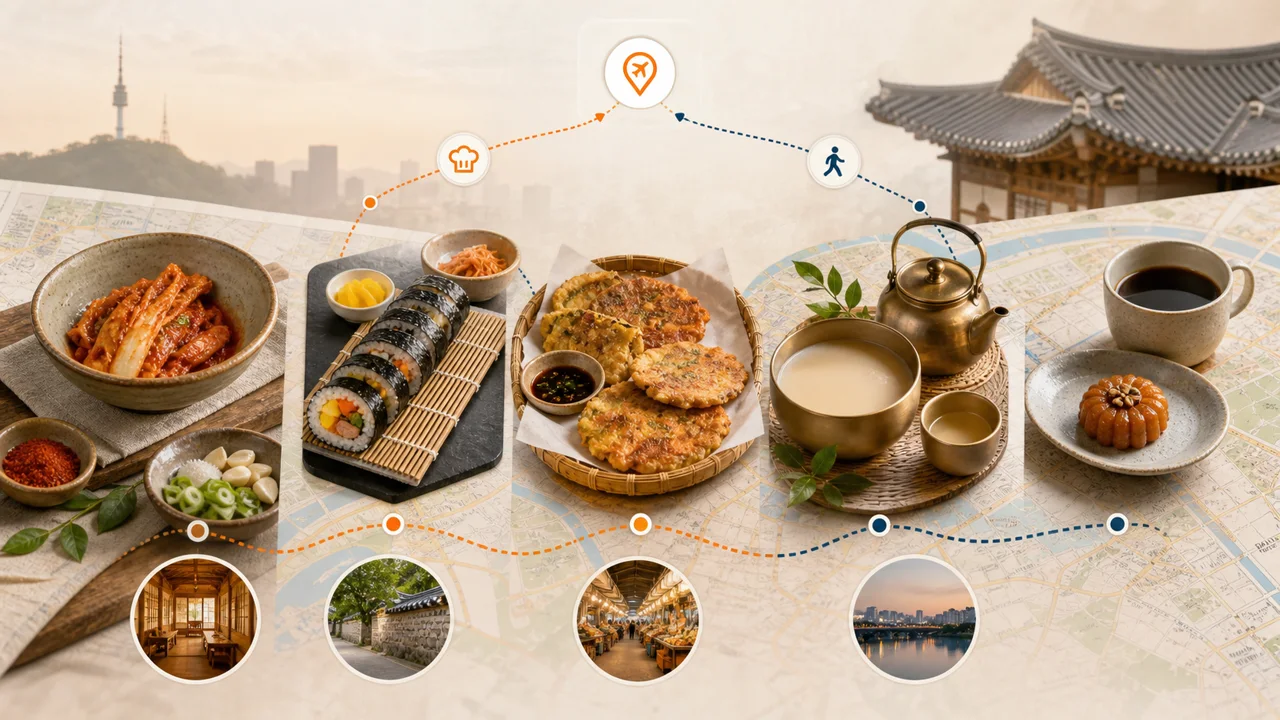
Seoul cooking class, Seoul food tour, Korean cooking class Seoul, and Seoul market food tour all carry the same planning problem: the traveler knows the food matters, but the first day still needs a shape. Kimbap, kimchi, banchan, barbecue, market pancakes, street snacks, cafe dessert, tea, and rice wine can all sound like first-day candidates.
That is why the answer should not be another giant food list. Seoul works better when food becomes a filter. One hosted class or one market-led route can make the day feel chosen, while the rest of the city stays available for later.
Cooking class if you want a table, food tour if you want orientation
A Korean cooking class is strongest when the first day needs structure. You get one address, one host, one set of ingredients, and a clear finish. Banchan, kimchi, gimbap, rice table basics, or a home-cooking table can turn Korean food from something you recognize into something you understand.
A Seoul food tour is stronger when the city still feels too wide. Visit Seoul frames the city through traditional markets, hanok restaurants, trendy cafes, fusion dining, and global neighborhoods. A compact market route helps translate that range into a few useful decisions before dinner.
Keep the market route smaller than the appetite
Gwangjang Market and Mangwon Market are easy reasons Seoul food tours keep showing up in search. Visit Seoul describes Gwangjang as a central traditional market with food stalls and dishes such as gimbap, mung bean pancakes, tteokbokki, and fish cake. Mangwon brings a different rhythm: snacks, chicken gangjeong, croquettes, traditional alcohol, and a nearby park option.
Both can work on a first day. The mistake is treating them as proof that every famous snack needs a slot. Choose one market as the food anchor, then protect the next move. A class, market route, cafe, and late dinner will be too much for many travelers.
Use makgeolli, tea, or dessert as the reset
Seoul food planning gets better when the reset is allowed to be small. A makgeolli counter, tea table, dessert lab, or quiet coffee stop can keep the food theme alive without asking the day to keep eating.
This matters because Korean food is already highly recognizable for many visitors. Korea.net's reporting on foreign Hansik preferences highlights familiar choices such as bibimbap, gimbap, kimchi fried rice, ramyeon, and tteokbokki. Recognition is useful, but the better trip memory comes from choosing the right pace.
5 Seoul Food Anchors for a First Day
These are planning anchors, not fixed operating details. Official Visit Seoul and Korea.net sources were checked on May 22, 2026, but market hours, class schedules, meeting points, routes, weather, and transit can change. Confirm live details before building the day around one stop.
1. Korean Home Cooking Table
2. Seoul Pantry Banchan Lab
3. Seoul Flavor Counter
4. Seoul Makgeolli Pairing Counter
5. Seoul Dessert Lab
Common Questions
A few direct answers for planning the page in real life.
Should I choose a Seoul cooking class or a Seoul food tour?
Choose a Seoul cooking class if you want hands-on technique, a hosted table, and a food memory you can finish. Choose a Seoul food tour if you want market orientation, snack vocabulary, and less decision-making on the first day. The better choice depends on appetite, walking tolerance, social energy, and whether you want to make something or read the city through a guide.
Is a Seoul food tour worth it on the first day?
It can be worth it when the route is compact and the guide helps you understand market rhythm, ordering, ingredients, and what to try next. It is less useful if it becomes a long cross-city crawl. On a first day, one market or one neighborhood is enough.
What is the best Korean cooking class in Seoul for first-time visitors?
For a first-time visitor, the best Korean cooking class is usually practical and not too long: banchan, home cooking, kimchi, gimbap, rice table basics, or a hosted meal table. It should give the day a center without taking over the whole itinerary.
How do I avoid overplanning Seoul food?
Pick one anchor first, then one reset. A Korean cooking class plus a tea stop is enough. A Gwangjang or Mangwon market route plus one calm cafe or riverside break is enough. Save extra options to Maybe List or Trip Draft instead of adding them to the same day.
- Visit Seoul - About SeoulOfficial Seoul tourism source used for broad food-city context, including traditional markets, hanok restaurants, cafes, and neighborhood dining.
- Visit Seoul - Gwangjang MarketOfficial Seoul tourism source used for Gwangjang Market context, traditional Korean snacks, and market-food framing.
- Visit Seoul - Mangwon MarketOfficial Seoul tourism source used for Mangwon Market context, snack variety, and picnic-friendly market planning.
- Korea.net - Foreign Hansik PreferencesOfficial Republic of Korea source used for foreign visitor interest in bibimbap, gimbap, kimchi fried rice, ramyeon, and other Hansik staples.