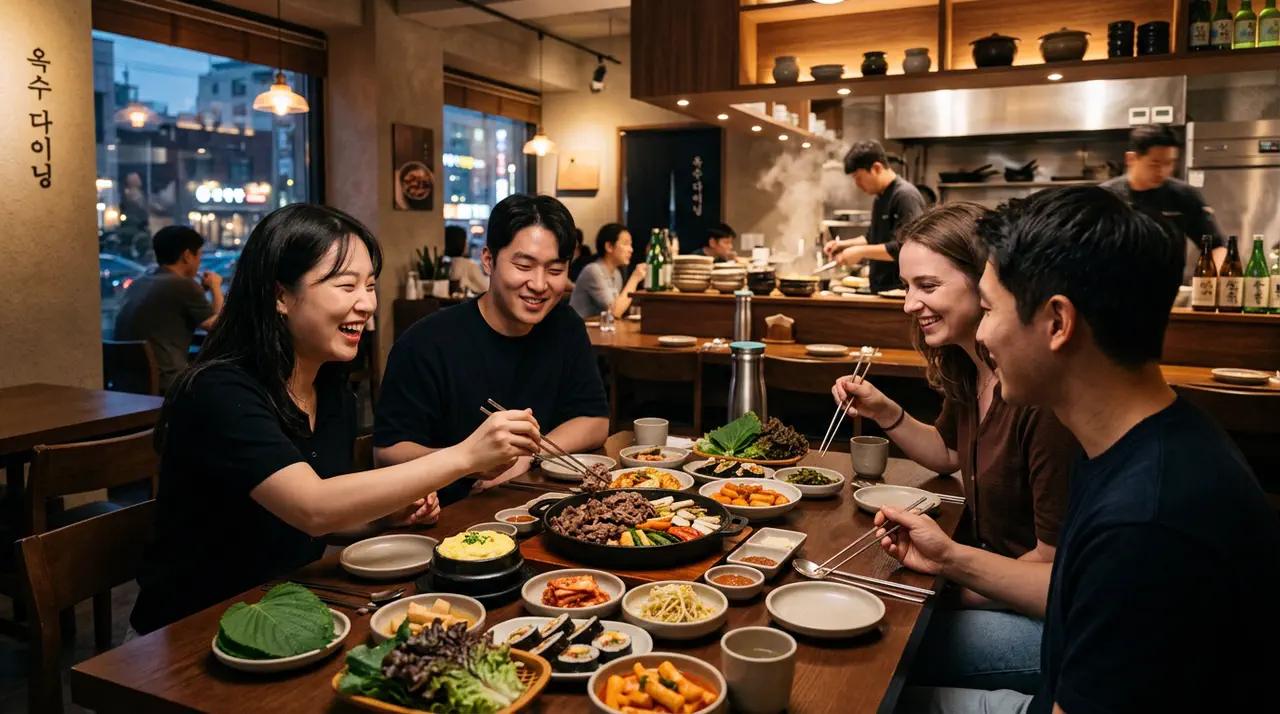
In Seoul, food is often the smartest way into the city. It gives context, movement, and visible proof without forcing the whole day to revolve around content.
- Food-first works in Seoul because it gives both proof and pace.
- The best posting moment is usually the finish, not the whole experience.
- Leave enough room for one more neighborhood stop after the table.
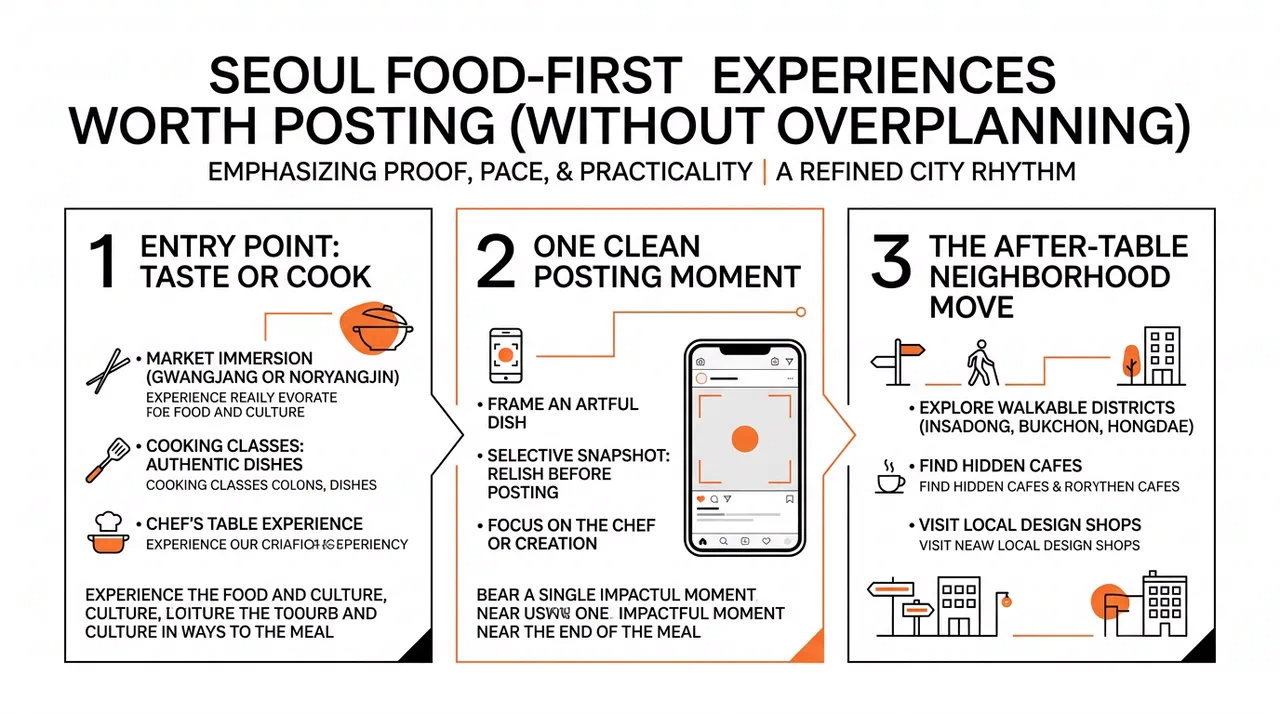
Food gives Seoul an immediate human scale
Seoul moves quickly, and that speed can make the city feel abstract if you only approach it through broad sightseeing. Food changes that fast. Tasting, plating, pouring, and hearing how locals actually move through the city makes Seoul legible much sooner.
That is why food-first experiences are often stronger than generic attraction planning here. They deliver context, momentum, and a believable story in one place.
Choose formats that still work when the phone is down
A lot of Seoul content looks high-energy online, but the better experience is the one that still feels worth doing when nobody is filming it. A tasting, class, or host-led table should stand up before the social layer arrives.
Then the social layer becomes useful instead of desperate: a plated finish, a market frame, one before-and-after moment, or a clean final table shot that actually means something.
Leave room for one more neighborhood move
A smart Seoul day rarely ends at the last bite. It usually wants one more move after that: a nearby cafe, a short walk, a market lane, or a softer neighborhood follow-up.
That is what keeps food-first planning from becoming too heavy. The city keeps moving after the table, and your itinerary should leave enough room for Seoul to stay alive beyond the main event.