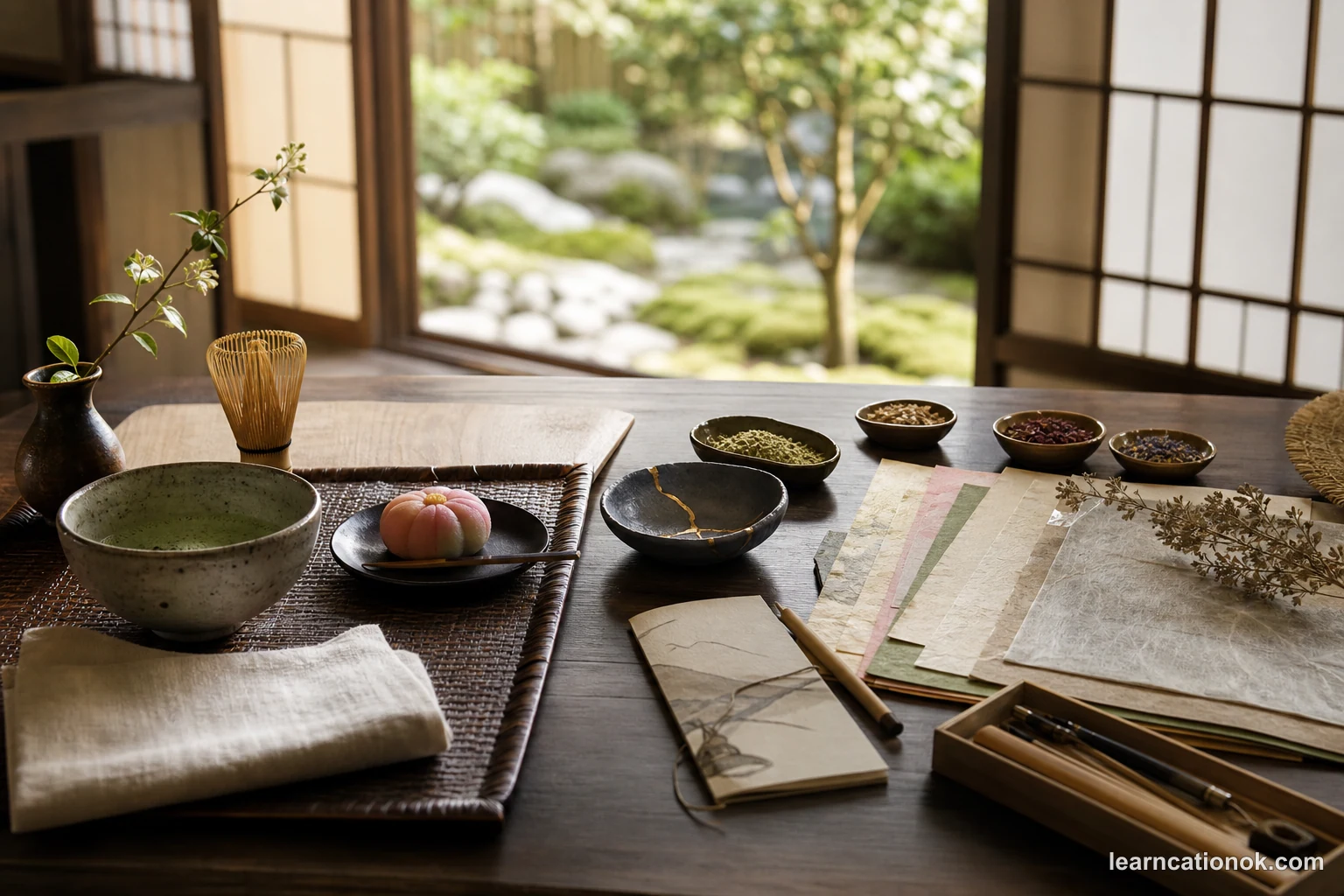
A first Kyoto day does not need to prove that you understand Kyoto. It needs one clear way in. A tea ceremony gives the day stillness, etiquette, and a shared bowl. A craft workshop gives the day material, touch, and a finished memory.
- Choose tea ceremony when your first Kyoto day needs stillness, etiquette, and a low-movement cultural anchor.
- Choose a craft workshop when your hands need focus and you want one object or technique to carry the memory.
- Keep the reset close. Kyoto gets harder when a calm ritual becomes the first stop in an overloaded temple-and-market route.
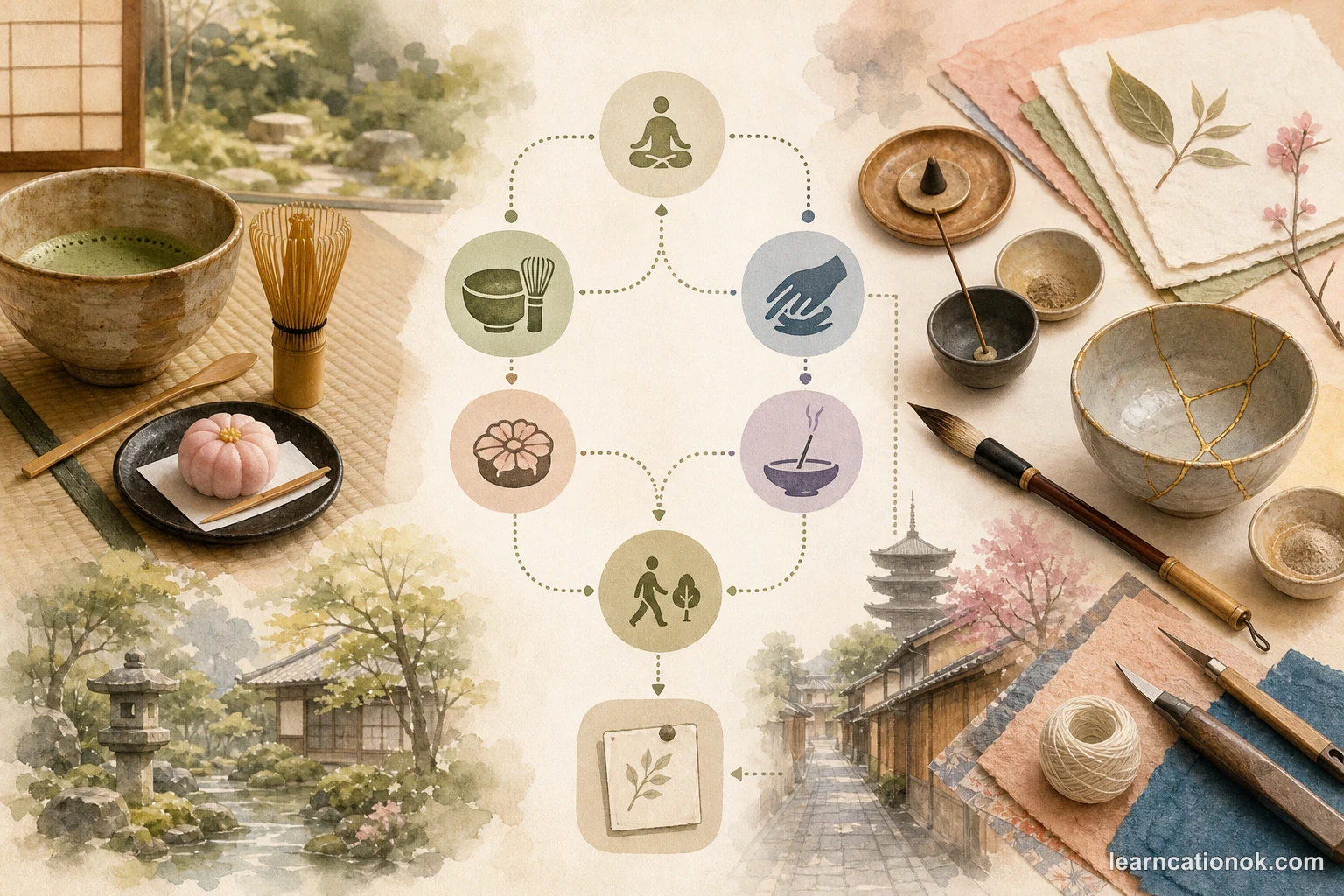
The first Kyoto choice should reduce pressure
Kyoto can make a first-time traveler feel responsible for choosing the correct cultural experience. Tea ceremony sounds essential. Crafts sound more personal. Nishiki sounds easy to add. A temple nearby makes the route look efficient.
That pressure is the planning problem. A better first day starts by choosing what kind of attention you have. Tea asks for stillness and social awareness. Craft asks for touch, repetition, and one material. Food-adjacent experiences ask for taste and etiquette.
For Learncation OK, the first choice is not about what is most important in Kyoto. It is about what will make the rest of Kyoto easier to notice.
Choose tea ceremony when stillness is the goal
A tea ceremony is strongest when the day needs quiet structure. It gives you a room, a sequence, a bowl, sweets, posture, and a reason to slow down. For travelers who have spent the morning moving through stations, luggage, crowds, or a dense temple plan, that can be more useful than another big stop.
Kyoto Travel's activity listings put tea ceremony inside the same practical search world as workshops, tours, languages, duration, and available rain-or-shine filters. That matters because tea is not only symbolic. It is also a booking with timing, location, and group fit.
Choose tea if the first day should feel settled. Then protect the settlement. Add one short walk, one garden, one cafe, or a direct return, not a second cultural performance.
Choose craft when you need something to do with your hands
A craft workshop is better when quiet sitting would make you more aware of being tired. Incense, washi paper, kintsugi, brush, textile, bamboo, and small object sessions give attention a task. The body learns through sorting, folding, blending, repairing, trimming, or shaping.
Kyoto's official craft material is useful because it frames traditional crafts as living techniques, not only finished souvenirs. The Kyoto Museum of Crafts and Design material also points to 74 Kyoto craft disciplines and workshop-concierge context, which reinforces the idea that craft can be an entry point into the city.
Choose craft if you want a memory with texture. The practical checks are reservation timing, language support, material handling, drying or finishing rules, pickup or shipping, and whether the neighborhood has a quiet reset close enough to keep the day simple.
Use incense or wagashi when the group is split
Some travelers do not want a formal tea ceremony, but also do not want a long workshop. Sensory formats can bridge the gap. Incense gives scent, memory, and concentration. Wagashi gives shape, seasonality, and food without turning the day into a market crawl.
This is where a Kyoto first day can stay flexible. A wagashi table can sit near a tea decision. An incense session can feel meditative without asking everyone to understand ceremony etiquette first. A washi or kintsugi session can become the calmer alternative when food is not the point.
The bridge option is not a compromise. It is the right answer when the group needs a shared cultural anchor with less pressure.
Keep the reset narrow and respectful
Responsible Kyoto planning is not only about manners after you arrive. It begins with the route. Kyoto Travel's responsible-travel guidance asks visitors to respect local communities, avoid blocking roads, consider residents, and use congestion tools. That should shape how a first cultural day is built.
If the anchor is central, keep the reset central. If the anchor is eastern, do not force a west-side add-on. If Nishiki enters the plan, remember that the official market guidance asks visitors not to eat while walking and to eat at the store where food was purchased or bring it home.
A calm Kyoto first day is successful when one ritual or one material stays visible in memory. The rest of the day should support that, not compete with it.
5 Kyoto First-Day Culture Anchors
These are planning anchors, not fixed operating details. Official Kyoto sources were checked on June 7, 2026, but workshop schedules, tea-ceremony availability, language support, meeting points, finishing or pickup details, market rules, congestion, weather, and transit can change. Confirm live details before building the day around one stop.
1. Kyoto Tea Ritual Atelier
2. Incense Blending Studio
3. Washi Paper Craft Session
4. Kyoto Kintsugi Gesture Studio
5. Kyo Wagashi Molding Table
Common Questions
A few direct answers for planning the page in real life.
Should I choose a tea ceremony or craft workshop in Kyoto?
Choose a tea ceremony if you want quiet etiquette, matcha, wagashi, and a seated ritual that lowers the pace. Choose a craft workshop if you want tactile learning, a finished object, and a clearer hands-on memory. The best first-day choice depends on whether your body wants stillness or focus.
Are Kyoto craft workshops good for first-time visitors?
Yes. Incense, washi, kintsugi, wagashi, brush, textile, and small object workshops can be strong first-time Kyoto anchors because they make traditional culture practical without requiring a large sightseeing route. Confirm language support, meeting point, duration, and finishing or pickup details before booking.
Can I combine a Kyoto tea ceremony with another workshop?
You can, but it is usually better to choose one main cultural anchor and one soft reset. Tea ceremony plus incense or wagashi can work if both are short and nearby. A long tea ceremony, a long craft workshop, Nishiki, and multiple temples in the same day will usually make the first day less readable.
What should I leave open on a first Kyoto culture day?
Leave the second beautiful idea open. Put it in Maybe List or Trip Draft instead of forcing it into the same day. Kyoto rewards attention, and attention drops when the day becomes a relay between rituals, workshops, markets, and crowded streets.
- Kyoto Travel - ActivitiesOfficial Kyoto tourism source checked on June 7, 2026 for tea ceremony, workshop, guided tour, language, duration, rain-or-shine, and activity-filter context.
- Kyoto Travel - Responsible TravelOfficial Kyoto tourism source checked on June 7, 2026 for etiquette, local-community consideration, congestion tools, and responsible route planning.
- Kyoto Travel - Kyoto Museum of Crafts and DesignOfficial Kyoto tourism source checked on June 7, 2026 for traditional craft context, the 74 crafts framing, and workshop-concierge context.
- Kyoto Travel - Enjoy and Support Traditional Arts at MOCADOfficial Kyoto tourism source checked on June 7, 2026 for Kyoto craft-preservation framing and hands-on traditional craft experience context.
- Kyoto Travel - Central Kyoto CityOfficial Kyoto tourism source checked on June 7, 2026 for central Kyoto, Nishiki, Shijo, Nijo, and traditional-culture route context.
- Kyoto Travel - Kyoto Nishiki Food MarketOfficial Kyoto tourism source checked on June 7, 2026 for Nishiki Market context and the eat-at-the-store etiquette note used in food-adjacent planning.