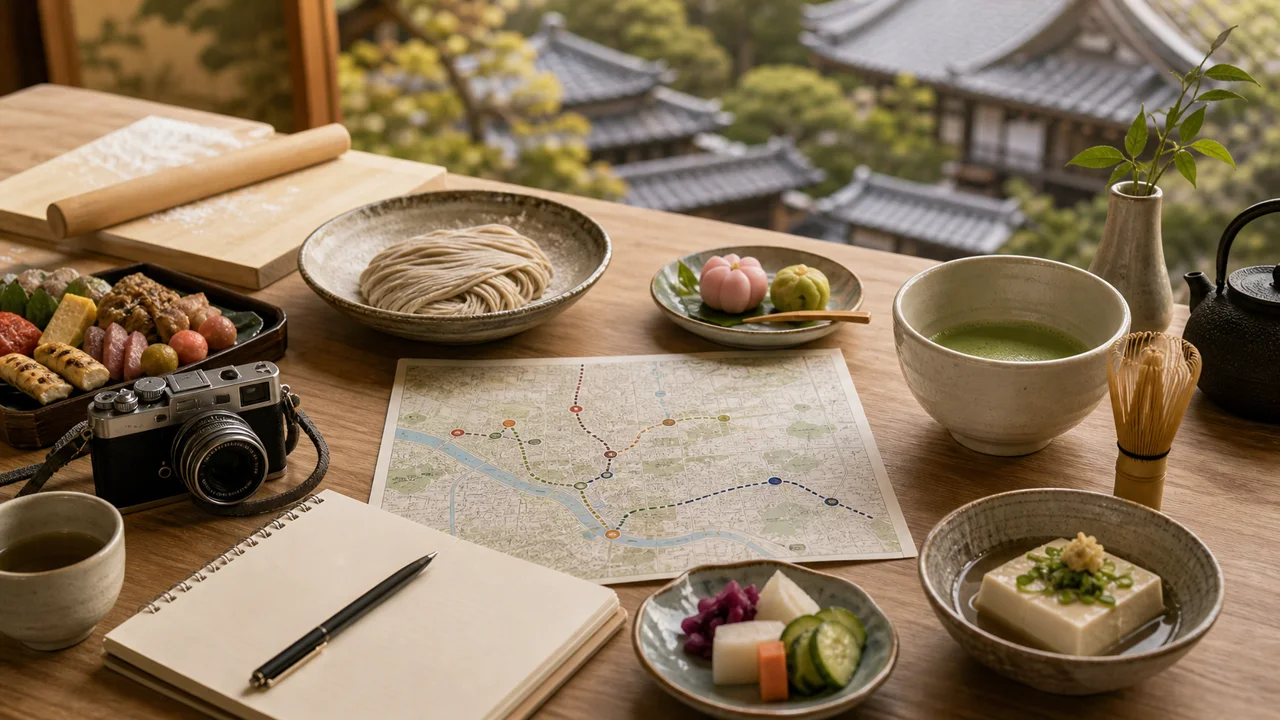
Kyoto tea ceremony and Kyoto cooking class searches both come from the same useful instinct: travelers want the city to slow down before it becomes a temple-and-market checklist. The right first-day food anchor depends on whether you need stillness, hands-on technique, or a small guided route.
- Choose a Kyoto tea ceremony when the first day needs stillness; choose a cooking class when you want technique and one finished memory.
- Nishiki Market works better as a compact food-culture route than as a long snack crawl, especially because the official guidance asks visitors not to eat while walking through the market.
- The clean Learn-rest rhythm is one tea or food anchor, one quiet reset, and one short walk before Kyoto starts to feel crowded by choices.
Kyoto search demand is really a pacing problem
Kyoto tea ceremony, Kyoto cooking class, Kyoto food tour, and Nishiki Market food searches look like separate queries. Underneath, they often ask the same question: how do you enter Kyoto without turning the first day into a beautiful but tiring list?
Kyoto rewards restraint more than coverage. Tea, sweets, soba, tofu, pickles, market ingredients, and garden pauses can all be right, but they should not all happen on the same first day. The smarter move is to choose one food-culture anchor and let it set the pace.
Tea ceremony if you need stillness, cooking class if you need a task
A Kyoto tea ceremony is strongest when the city already feels too symbolic. It gives the day a small room, a bowl of matcha, a sequence, and a reason to stop performing the itinerary. Kyoto Travel's activity guidance places tea ceremony alongside traditional skills and cultural experiences, which is exactly the role it should play: a cultural anchor, not a photo obligation.
A Kyoto cooking class is stronger when you want the city to become practical. Soba dough, tofu, pickles, pantry notes, wagashi, or a small kitchen table turns Kyoto food from something you admire into something you can understand with your hands.
Nishiki is useful when the route stays compact
Nishiki Market is one of Kyoto's clearest food references because it compresses ingredients, side dishes, yuba, Kyoto vegetables, dried goods, sweets, and market behavior into a short central corridor. Kyoto Travel notes that the market stretches roughly 400 meters from Teramachi to Takakura and highlights a visitor rule that matters for planning: avoid eating while walking through the market.
That makes Nishiki better as a guided read than as a moving buffet. Buy, pause, eat where appropriate, or take something away. The point is not to collect every snack. The point is to understand the food vocabulary before the rest of the day gets louder.
Use sweets or tea as the reset, not an extra project
Kyoto's food layer has a built-in soft reset. Kyoto Travel's food guidance connects the city to traditional cuisine, Japanese sweets used in tea ceremony, tea, soba, and vegetarian food traditions. That gives travelers a better planning tool than another major stop.
If the anchor is a tea ritual, the reset can be a short walk. If the anchor is soba or tofu, the reset can be wagashi or tea. If the anchor is Nishiki, the reset can be a quiet seat nearby. The first day should leave enough space for Kyoto to keep unfolding tomorrow.
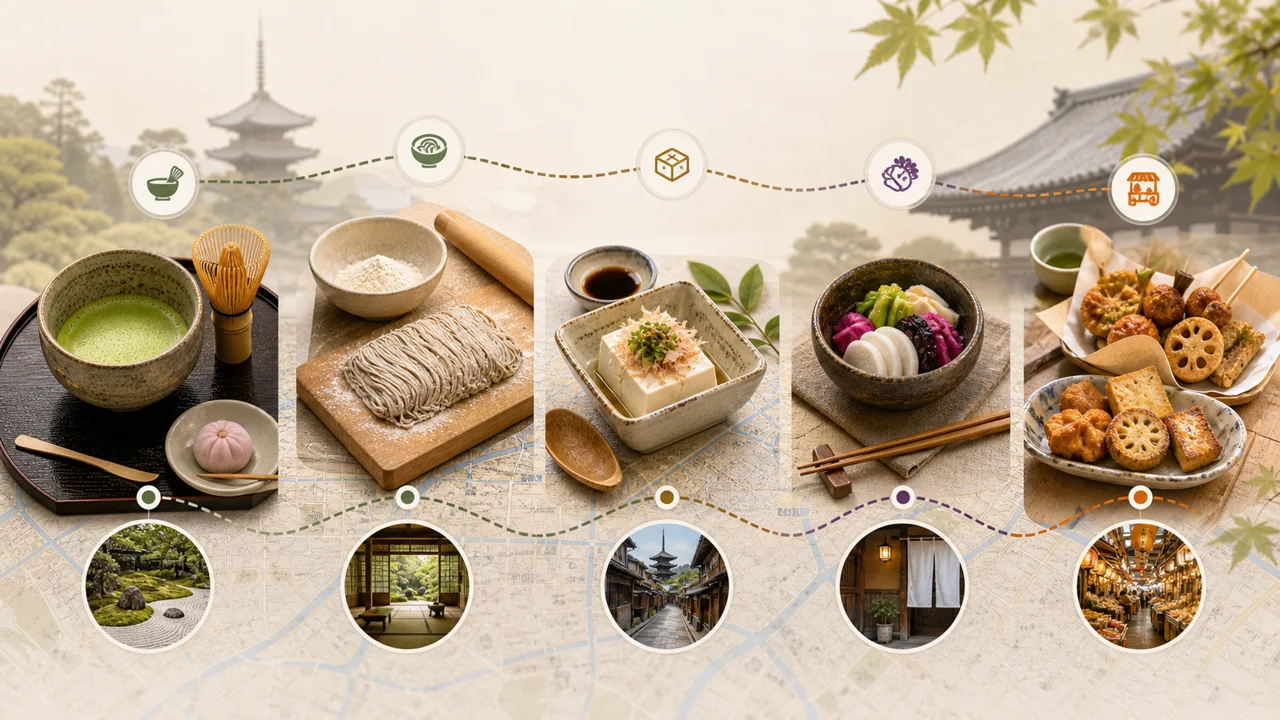
5 Kyoto Food-Culture Anchors for a Calm First Day
These are planning anchors, not fixed operating details. Official Kyoto Travel sources were checked on May 23, 2026, but market rules, class schedules, meeting points, hours, weather, and transit can change. Confirm live details before building the day around one stop.
1. Kyoto Tea Ritual Atelier
2. Kyo Wagashi Molding Table
3. Soba Dough Lesson in Kyoto
4. Kyoto Tofu Home Table
5. Kyoto Flavor Counter
Common Questions
A few direct answers for planning the page in real life.
Should I choose a Kyoto tea ceremony or a cooking class?
Choose a Kyoto tea ceremony if you want stillness, etiquette, and a quiet cultural frame. Choose a Kyoto cooking class if you want hands-on technique, ingredients, and a food memory you can finish. A tea ceremony is better when the day needs calm. A cooking class is better when the day needs a clear task.
Is Nishiki Market worth it on a first day in Kyoto?
Nishiki Market can be worth it when you keep the route compact and respect market etiquette. It is useful for seeing Kyoto ingredients, side dishes, yuba, vegetables, sweets, and market rhythm. It is less useful if you treat it as a long moving snack crawl.
What is the best first-day Kyoto food experience?
For many first-time visitors, the best first-day Kyoto food experience is one calm anchor: tea ceremony with wagashi, soba or tofu cooking, a small market flavor route, or a quiet dessert table. The strongest choice is the one that keeps the rest of the day readable.
How do I avoid overplanning Kyoto on day one?
Pick one food-culture anchor first, then one reset. A tea ritual plus a garden walk is enough. A soba class plus a quiet cafe is enough. A Nishiki route plus one nearby temple or shopping street is enough. Save the rest to Maybe List or Trip Draft.
- Kyoto Travel - ActivitiesOfficial Kyoto City tourism source used for activity context, including tea ceremony and food-related experiences.
- Kyoto Travel - Food and DrinkOfficial Kyoto City tourism source used for Kyoto cuisine, sweets, tea, soba, vegetarian cuisine, and food-culture context.
- Kyoto Travel - Kyoto Nishiki Food MarketOfficial Kyoto City tourism source used for Nishiki Market context, market etiquette, ingredients, side dishes, yuba, and Kyoto vegetables.