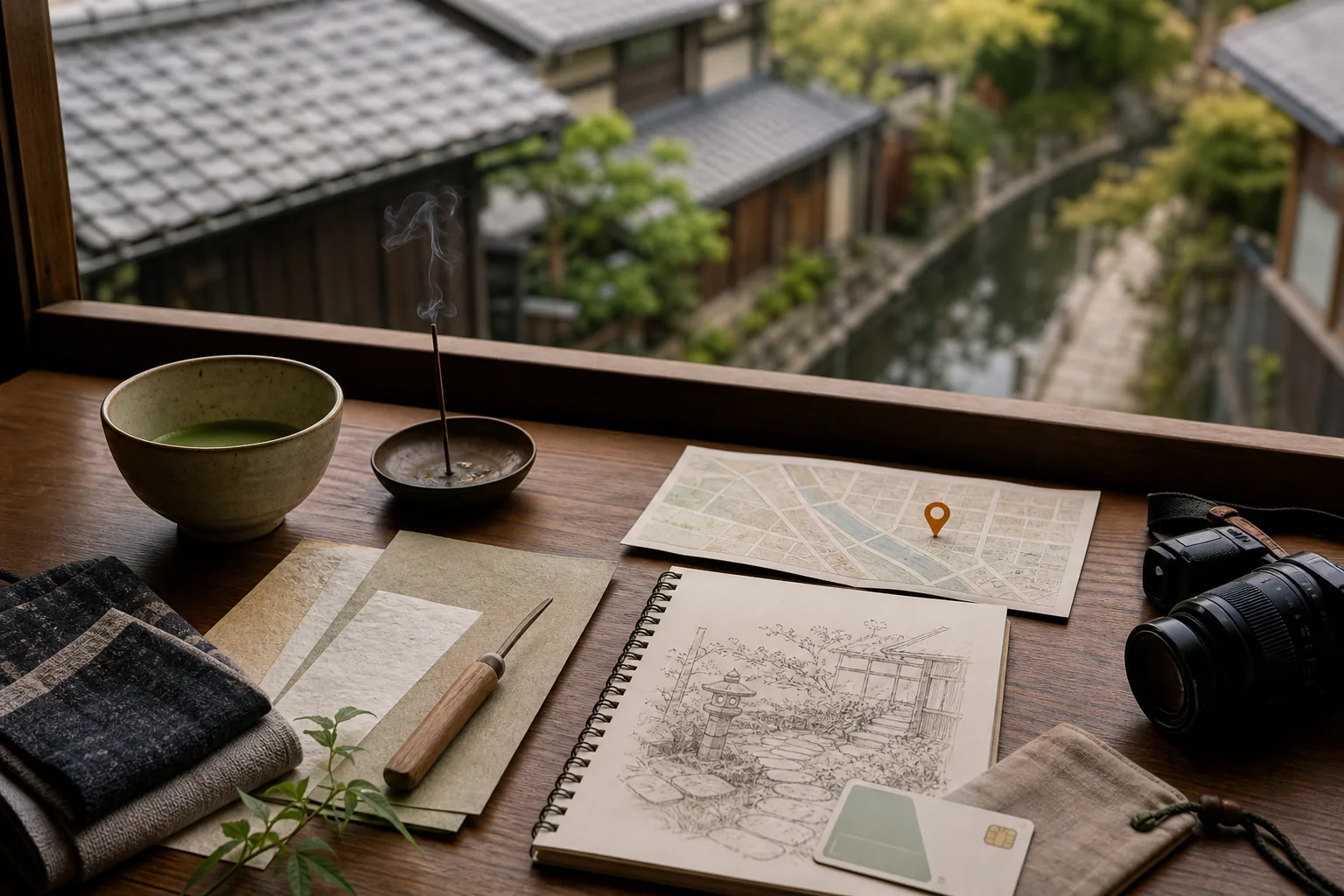
Kyoto can feel peaceful and exhausting at the same time. This guide is for travelers who want one meaningful thing to learn, one soft walk, and one quiet stop that leaves the day readable.
- A good Kyoto slow travel day needs a rhythm, not a long attraction list.
- Choose one workshop first, then keep the walk and quiet stop close enough that they do not become another transfer problem.
- Use Maybe List for the second beautiful idea. Kyoto rewards the option you protect from overplanning.
Kyoto rewards rhythm more than coverage
Kyoto is one of the easiest cities to overplan because almost every idea sounds gentle. A temple, a tea room, a craft studio, a garden, a market, a lane, and a museum can all feel small enough to add. Together, they become a day with no air in it.
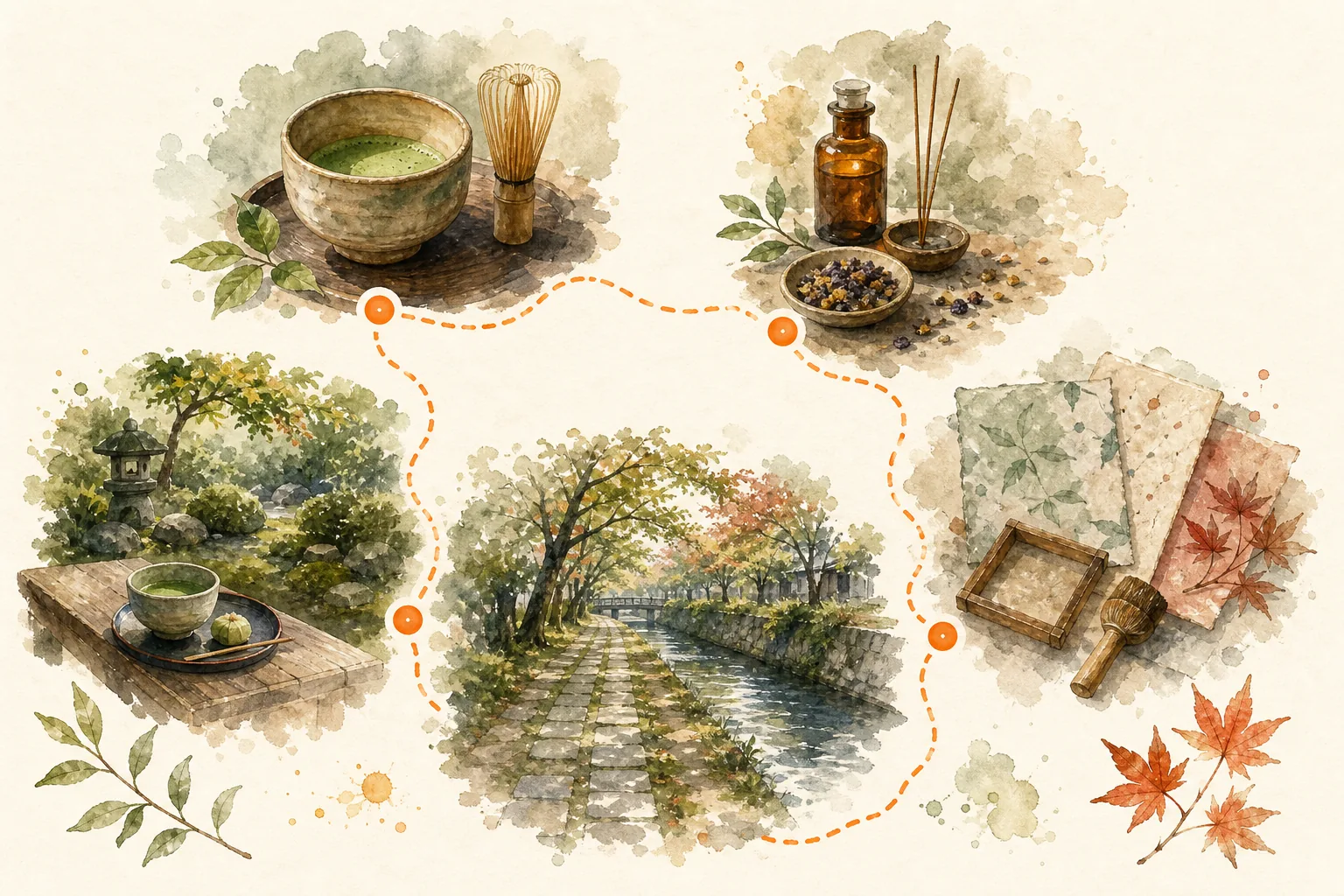
A slow Kyoto day should be built around a sequence: one workshop, one walk, one quiet stop. That is enough structure to make the day feel intentional and enough space to let Kyoto stay quiet around it.
Choose the workshop before choosing the walk
Start with the learning anchor. Kyoto Travel's activity guidance places tea ceremony, traditional crafts, and cultural skills at the center of what travelers can do in the city. That is useful for Learncation OK because a workshop gives the day a reason, not just a route.
Tea is best when the day needs stillness. Incense is best when you want scent, memory, and a calmer indoor table. Washi or ink is best when you want your hands to slow down before the city asks for more walking.
Make the walk a transition, not another achievement
The walk should connect the workshop to rest. The official Kyoto Travel page for Philosopher's Path describes a canal-side stroll between Ginkaku-ji and Nyakuoji Bridge, with quiet temple and museum options nearby. That is exactly how a slow day should use it: as a transition with texture.
Do not turn the walk into proof that you saw enough. One shaded canal, one stone path, one small bridge, one pause by water can do more for the day than three extra pins.
Protect the quiet stop from becoming a second itinerary
A quiet stop is not a backup attraction. It is the part of the day that lets the workshop settle. It can be tea after incense, a bench after sketching, a small museum room after washi, or an early return before evening.
Kyoto's responsible and sustainable tourism guidance is a useful reminder here: good travel should respect local life, scenery, and rhythm. For the traveler, that also means moving with less friction and fewer last-minute crossings.
Save the second beautiful idea
Kyoto will always offer one more beautiful idea. That is the trap. A second workshop, a second temple, a second market route, or a second famous street may be good, but it may not be good today.
Save it to Maybe List or Trip Draft. A slow Kyoto day is successful when you remember the workshop clearly, the walk softly, and the quiet stop without feeling that the city had to be conquered.
5 Kyoto Slow-Day Anchors
These are planning anchors, not fixed operating details. Official Kyoto Travel sources were checked on May 31, 2026, but opening hours, workshop schedules, etiquette rules, meeting points, weather, and transit can change. Confirm live details before building the day around one stop.
1. Kyoto Tea Ritual Atelier
2. Incense Blending Studio
3. Washi Paper Craft Session
4. Temple Garden Sketch Walk
5. Kyoto Garden Ink Table
Common Questions
A few direct answers for planning the page in real life.
What is a good slow travel day in Kyoto?
A good slow travel day in Kyoto uses one learning anchor, one walk, and one quiet stop. For example: tea ceremony or incense blending first, a canal-side or neighborhood walk after, then a garden, tea room, museum room, or early hotel reset.
How do I avoid overplanning Kyoto?
Avoid overplanning Kyoto by choosing a main neighborhood before choosing activities. Put one workshop in the day, one nearby walk, and one rest stop. Save extra temples, markets, or classes to Maybe List instead of stacking them.
Is the Philosopher's Path good for a slow Kyoto itinerary?
Yes. The Philosopher's Path works well as a slow-route transition because it runs along a canal in Sakyo and sits near quieter temple and museum options. It is best used as one walk, not as a connector for too many stops.
What Kyoto workshop fits a low-energy day?
Tea, incense, washi, sketching, garden ink, and small craft sessions fit a low-energy Kyoto day because they give the day a clear table or route. Choose a shorter, seated, or neighborhood-sized option when the rest of the day needs room.
- Kyoto Travel - ActivitiesOfficial Kyoto City tourism source used for tea ceremony, traditional craft, and activity context.
- Kyoto Travel - Philosopher's PathOfficial Kyoto City tourism source used for canal-side walking and Sakyo slow-route context.
- Kyoto Travel - Responsible TravelOfficial Kyoto City tourism source used for manners, local-respect, and low-impact planning context.
- Kyoto Travel - Sustainable TourismOfficial Kyoto City tourism source used for public transportation, sustainable activities, and slower stay context.