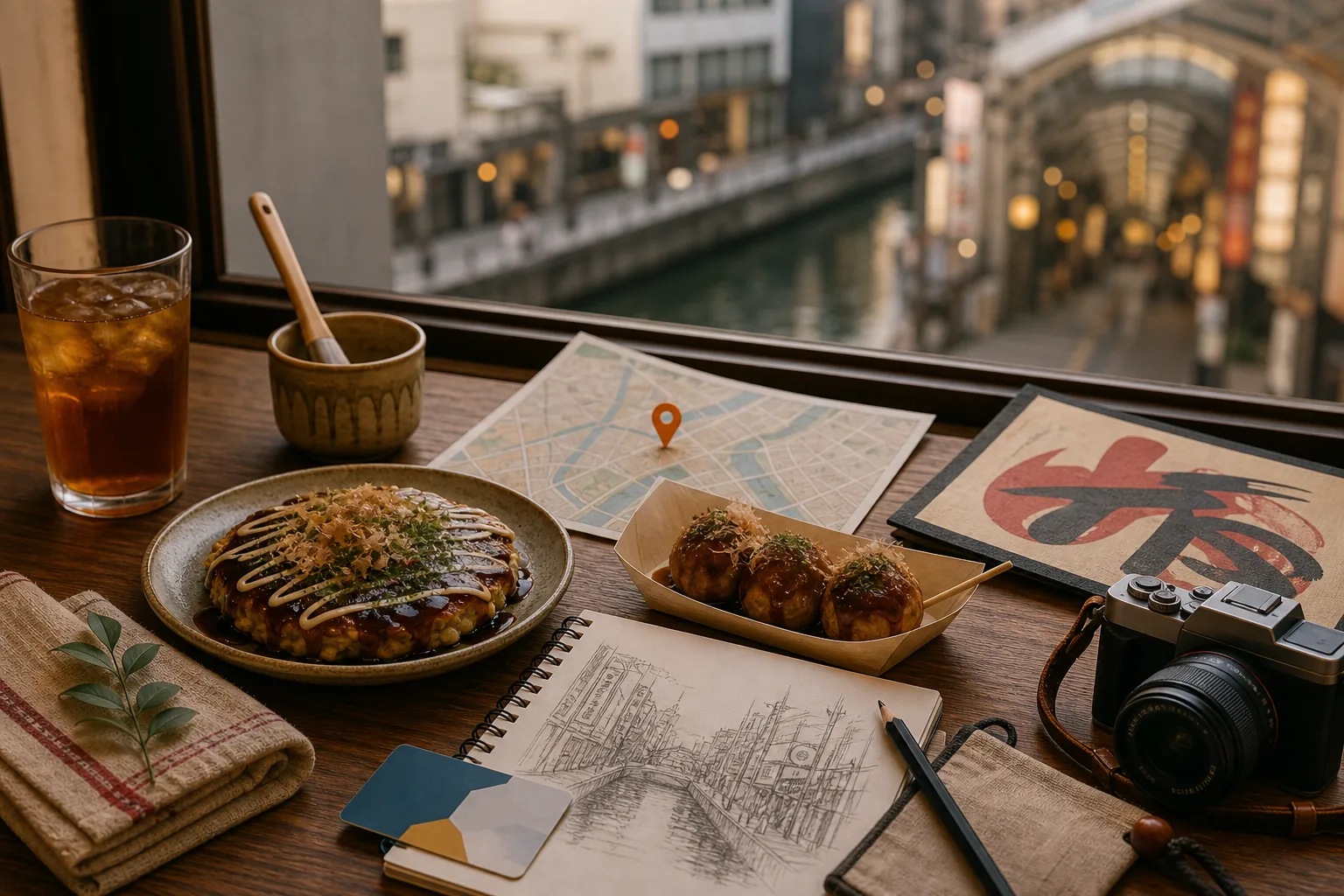
Osaka can be generous and tiring in the same hour. This guide helps you keep the food day specific without turning every snack, sign, arcade, and canal into another decision.
- A low-energy Osaka food day needs one seated food anchor before it needs more snacks.
- Use Shinsekai, Tenma, Horie, or Nakanoshima as a soft middle layer, not as another full itinerary.
- Dotonbori works better after the day already has a rhythm.
Osaka gets tiring when every snack becomes a decision
Osaka is easy to love because food is everywhere. That is also the planning problem. Takoyaki, okonomiyaki, kushikatsu, markets, coffee, signs, arcades, Dotonbori, Shinsekai, and Namba can all feel close enough to add.
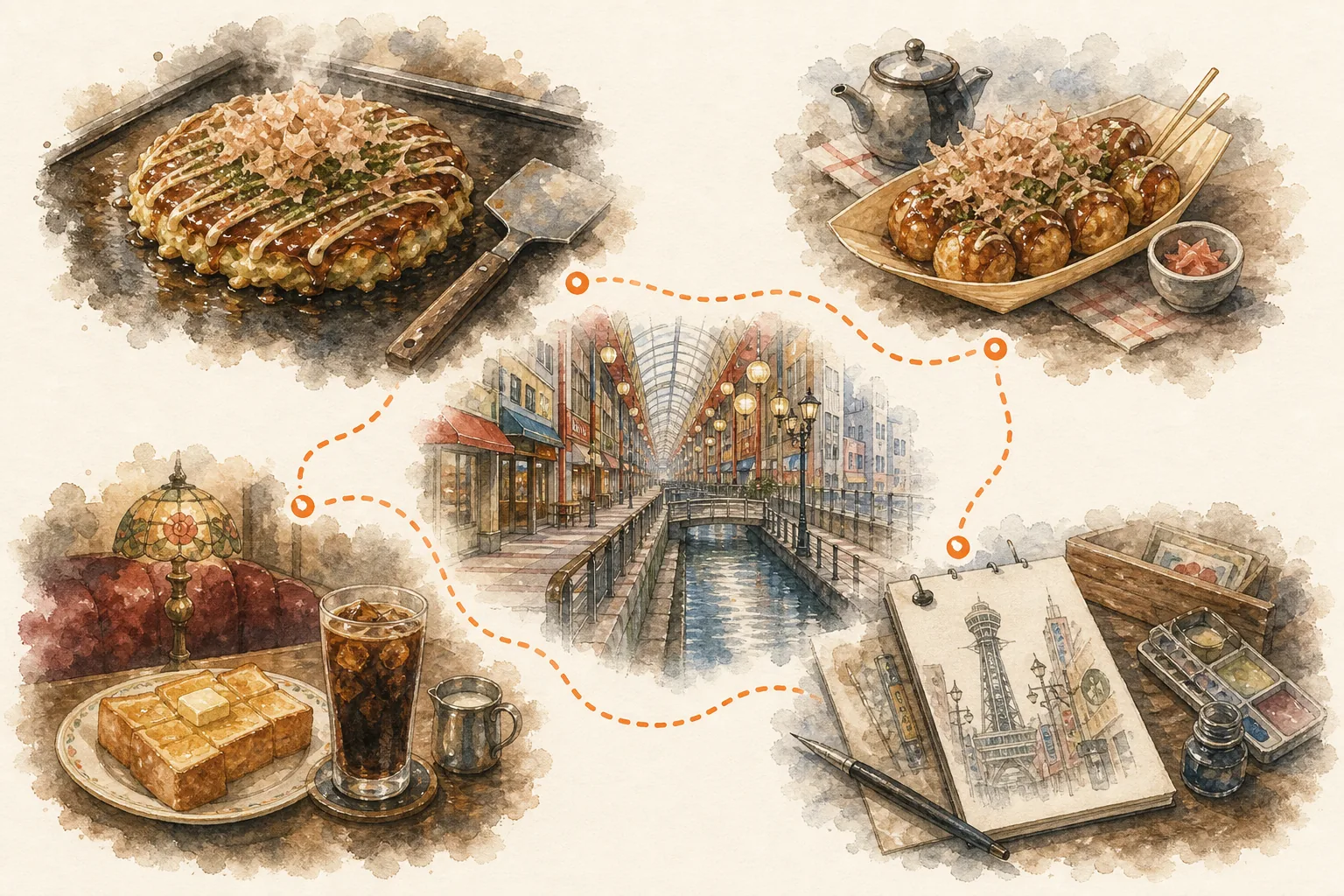
A low-energy Osaka food day should not try to eat the whole city. It should choose one warm anchor, one soft fun stop, and one rest reset. That gives the day enough Osaka without turning appetite into work.
Make food the anchor, not the whole route
A seated food experience is the cleanest first move. Okonomiyaki, takoyaki, a sauce counter, or a small kitchen table gives the day heat, smell, texture, and one finished memory. You are still eating Osaka, but the decisions are contained.
OSAKA-INFO's Kuromon Market material is useful because it shows how much of Osaka's food identity comes from ingredients and small prepared foods. For a low-energy day, use that context carefully. The point is not to turn the market into a long moving meal. The point is to understand the food vocabulary before choosing the next stop.
Use one soft fun stop after the food anchor
Osaka should still feel fun. The trick is choosing a small fun layer instead of a second major route. Shinsekai can work when you want retro signs, casual streets, and a different mood from Namba. Tenma can work when you want coffee, toast, and a softer pause. Horie can work when you want a print table or design-led reset.
OSAKA-INFO frames Shinsekai around Tsutenkaku and old downtown food streets. That makes it useful as a short middle chapter, not a test of stamina. One sketch, one snack, or one look at the signs can be enough.
Put the rest reset before the loud finish
The rest reset should happen before the night gets bright. Nakanoshima, a cafe seat, a short canal look, or an early hotel return can keep Dotonbori from becoming the only thing you remember. Rest is not a failure of the food day. It is what lets you taste the next thing.
Dotonbori is strongest when the day already has a center. If you arrive with no rhythm, every sign feels like a command. If you arrive after one food anchor and one reset, the canal, lights, and snack choices become easier to edit.
Save the loud version of Osaka for later
A low-energy Osaka day is not less Osaka. It is a better fit for travelers who want the city to stay enjoyable instead of becoming a checklist of appetite. Save the second food idea, the second arcade, or the late-night route to Maybe List.
The strongest Osaka day is often one hot plate, one short walk, one soft seat, and one bright finish. That is enough to feel the city without handing the map to your hunger.
5 Low-Energy Osaka Food and Fun Anchors
These are planning anchors, not fixed operating details. Official OSAKA-INFO sources were checked on June 1, 2026, but opening hours, class schedules, meeting points, weather, and transit can change. Confirm live details before building the day around one stop.
1. Osaka Okonomiyaki Iron Plate Lab
2. Takoyaki Home-Style Workshop
3. Osaka Kissaten Toast Session
4. Shinsekai Retro Sign Sketch Walk
5. Horie Print Club Table
Common Questions
A few direct answers for planning the page in real life.
What are low-energy things to do in Osaka?
Low-energy Osaka options include a seated okonomiyaki or takoyaki class, a kissaten coffee-and-toast reset, a short retro sign sketch walk, a print table, Nakanoshima river time, or a compact Dotonbori finish. Choose one anchor and keep the rest nearby.
How do I plan an Osaka food day without getting tired?
Start with one warm food anchor, then add one soft fun stop and one rest reset. Avoid making Dotonbori, Kuromon, Shinsekai, Tenma, and Namba all compete in one day unless you have high energy.
Is Dotonbori good for a low-energy Osaka day?
Dotonbori can work for a low-energy day if it is the finish, not the whole plan. Go after one calmer food or craft anchor, choose one small bite or photo moment, then leave before the area starts creating more decisions.
What is the best first Osaka food experience for tired travelers?
For tired travelers, the best first Osaka food experience is usually seated and guided: okonomiyaki, takoyaki, a sauce counter, a small kitchen table, or a kissaten-style food reset. The goal is to understand one flavor clearly instead of chasing a long snack list.
- OSAKA-INFO - DotonboriOfficial Osaka tourism source used for Dotonbori context and evening-route planning.
- OSAKA-INFO - ShinsekaiOfficial Osaka tourism source used for retro neighborhood, Tsutenkaku, and casual food context.
- OSAKA-INFO - Kuromon MarketOfficial Osaka tourism source used for market, food, and ingredient context.
- OSAKA-INFO - NakanoshimaOfficial Osaka tourism source used for river-island, public-space, and softer city reset context.