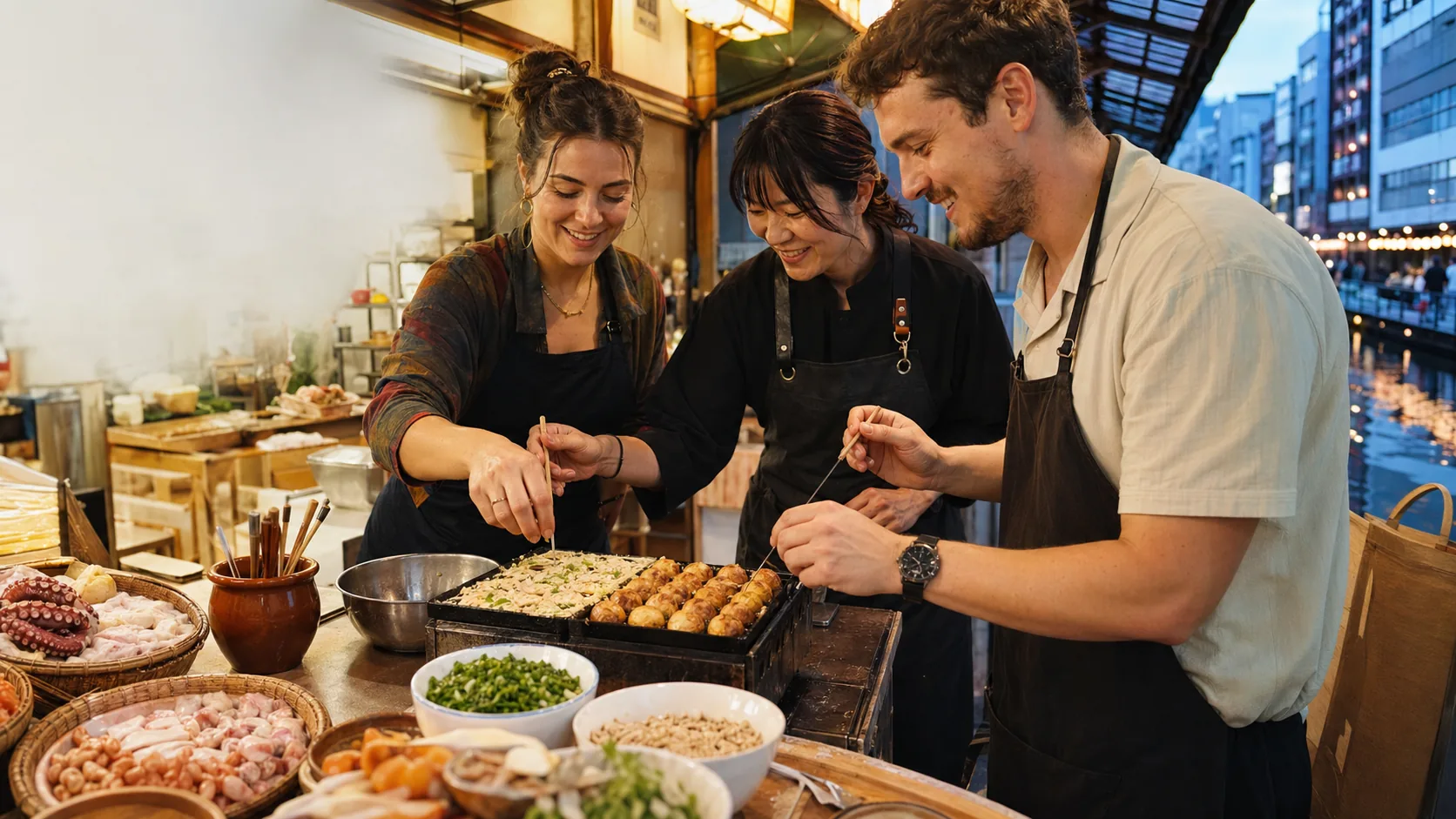
Dotonbori is worth seeing, but it should not be the whole Osaka food itinerary. Build the day around one market or cooking anchor first, then use Shinsekai and the canal lights as texture instead of a checklist.
- Do not make Dotonbori the whole Osaka food plan.
- A market walk or Osaka cooking class gives the day a center before the city gets loud.
- Use Dotonbori as the finish, when photos and appetite are easier to manage.
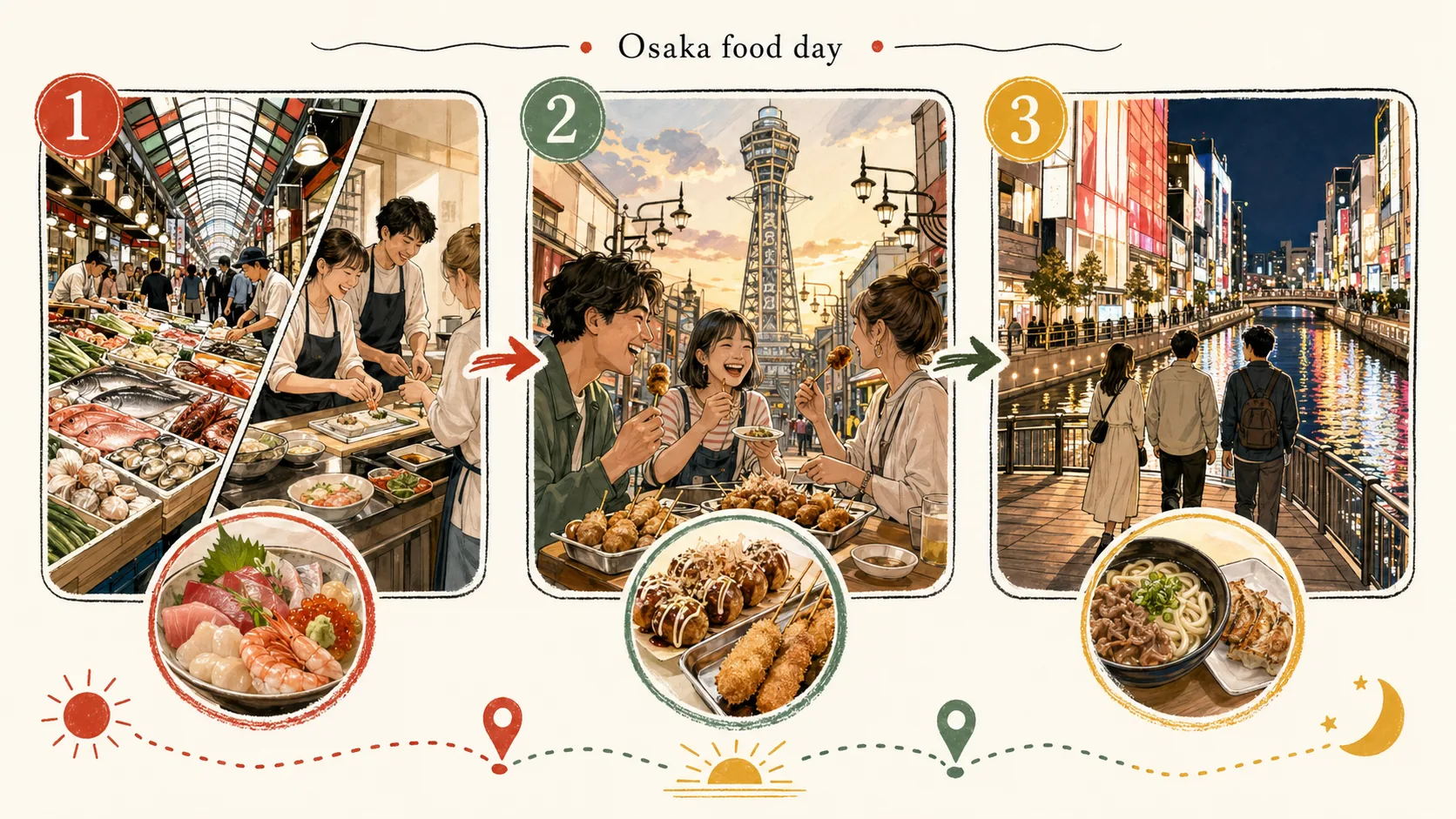
The mistake is treating Dotonbori like the whole itinerary
Dotonbori is not overrated. It is the part of Osaka many travelers came to see: giant signs, dense restaurants, canal reflections, and the sense that Minami is still awake when your map is already tired.
The mistake is arriving there first, hungry, and asking the neighborhood to make every choice for you. At peak volume, every line can look like the right line and every sign can feel like a command. That is how an Osaka food itinerary becomes more exhausting than delicious.
Use Dotonbori as the finish instead. When the day already has a food anchor, the evening becomes easier: one snack, one canal walk, one photo, and a cleaner exit before the area starts making decisions on your behalf.
Start with a market or cooking anchor
A smarter Osaka food day starts earlier and more deliberately. Kuromon Market is useful because it gives the city texture before the neon. OSAKA-INFO lists it as a roughly 580-meter market near Nippombashi with about 150 stores, including fresh fish, produce, and prepared food.
That does not mean the whole morning has to become a market crawl. Give it a job: understand the ingredients, taste one or two small things, then move into a hands-on block. An Osaka cooking class makes the day feel chosen instead of grazed.
This is also the best answer to the search query everyone secretly has: what to eat in Osaka. The answer is not one perfect dish. It is a sequence: see the ingredients, make or learn one local food properly, then snack with better judgment later.
Put Shinsekai in the middle, not as a late-night dare
Shinsekai gives the itinerary a different kind of appetite. It is still social and food-led, but the mood is retro, casual, and easier to read before the night gets too loud. OSAKA-INFO describes the area around Tsutenkaku, Janjan Yokocho, and its old downtown food streets as one of southern Osaka's distinctive neighborhoods.
Late afternoon is a good slot. You can use it for takoyaki, kushikatsu, a short wander, or a relaxed group stop without turning the whole day into another queue. It also gives your route a middle chapter between market learning and Dotonbori theater.
For travelers who want an Osaka food tour, this is where a guide can add value: not by feeding you more, but by helping you notice why the neighborhood feels different from Namba.
Let Dotonbori be the bright finish
By evening, Dotonbori makes more sense. You are no longer expecting it to explain Osaka from scratch. You already have the market, the class, or Shinsekai in your body, so the canal becomes atmosphere instead of pressure.
Keep the finish simple. Walk from Namba, choose one small bite or dessert, take the canal photo, and leave while you still like the place. The best Dotonbori food memory is often not the biggest meal. It is the one you could actually taste because the rest of the day was paced well.
If you are traveling with friends, this order also reduces friction. The person who wants photos gets the lights. The person who wants food gets the snack. The person who wants to learn something has already had the hands-on block. Everyone gets a version of Osaka without needing the same stamina.
Food Stops That Fit A Real Osaka Day
These notes avoid fragile opening-hour claims. OSAKA-INFO lists store hours as varying by location for Kuromon, Dotonbori, and Shinsekai, so confirm same-day maps, reservations, and holidays before building the whole day around one stop.
Kuromon Market
Osaka cooking-class anchor
Shinsekai and Janjan Yokocho
Dotonbori and Tombori Riverwalk
Common Questions
A few direct answers for planning the page in real life.
Is Dotonbori worth visiting for food in Osaka?
Yes, but it works better as the bright finish than the entire plan. Go after one calmer food anchor so you can enjoy the signs, canal, snacks, and photo moments without trying to make every decision while hungry.
What is the best food area in Osaka for first-time visitors?
Namba and Dotonbori are the easiest first-time base, Kuromon gives you ingredient and street-food context, and Shinsekai adds a retro casual layer around takoyaki, kushikatsu, and low-pressure group energy.
Should I book an Osaka food tour or an Osaka cooking class?
Book a food tour if you want someone to reduce the decisions and explain the neighborhood. Book a cooking class if you want the trip to leave a tactile memory, especially around takoyaki, homestyle cooking, or market ingredients.
What should I eat in Osaka in one day?
Use the obvious dishes as signposts, not homework: takoyaki, okonomiyaki, kushikatsu, market seafood, and one softer dessert or cafe stop. The better one-day Osaka food itinerary is about pacing, not finishing a checklist.