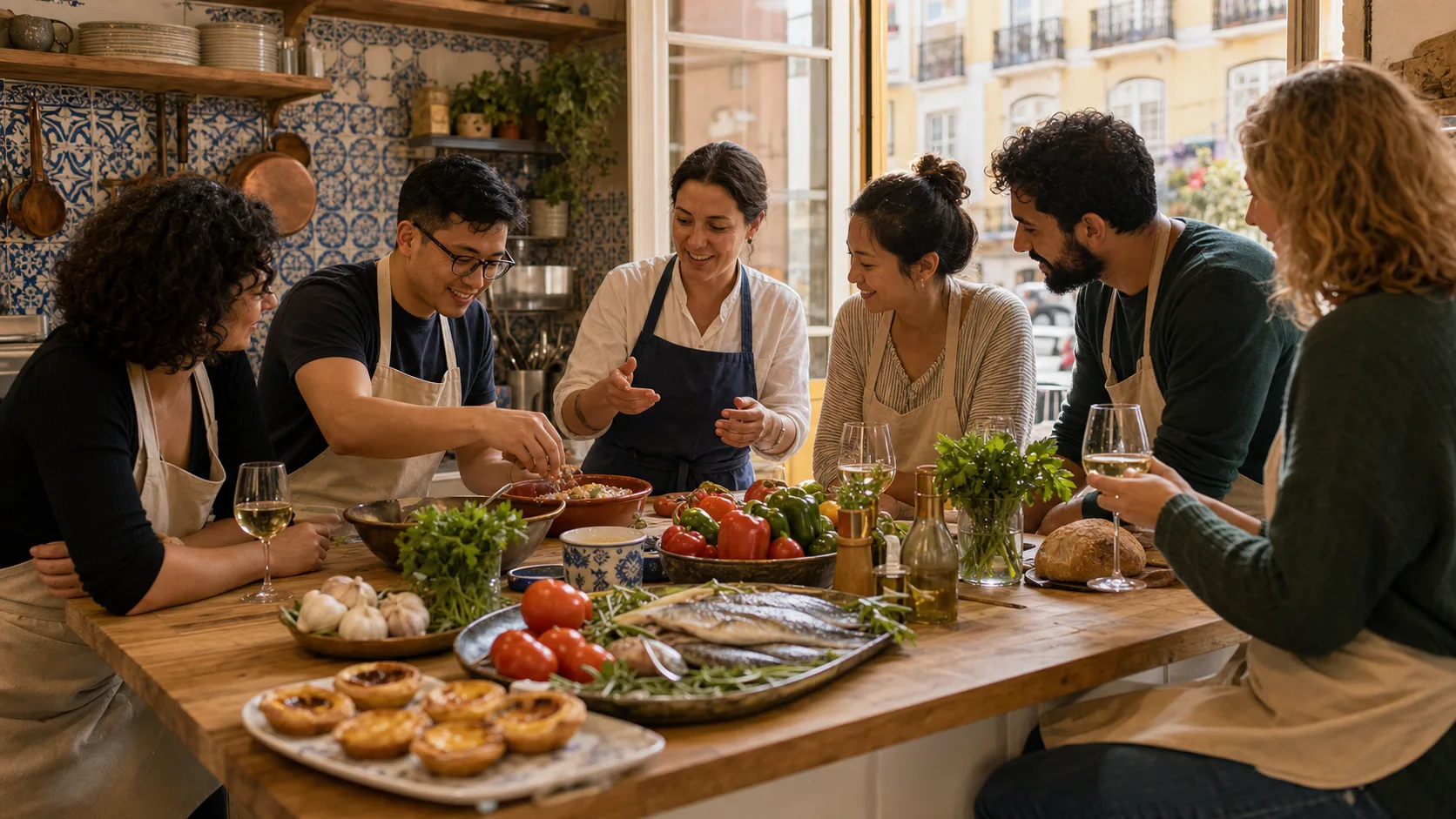
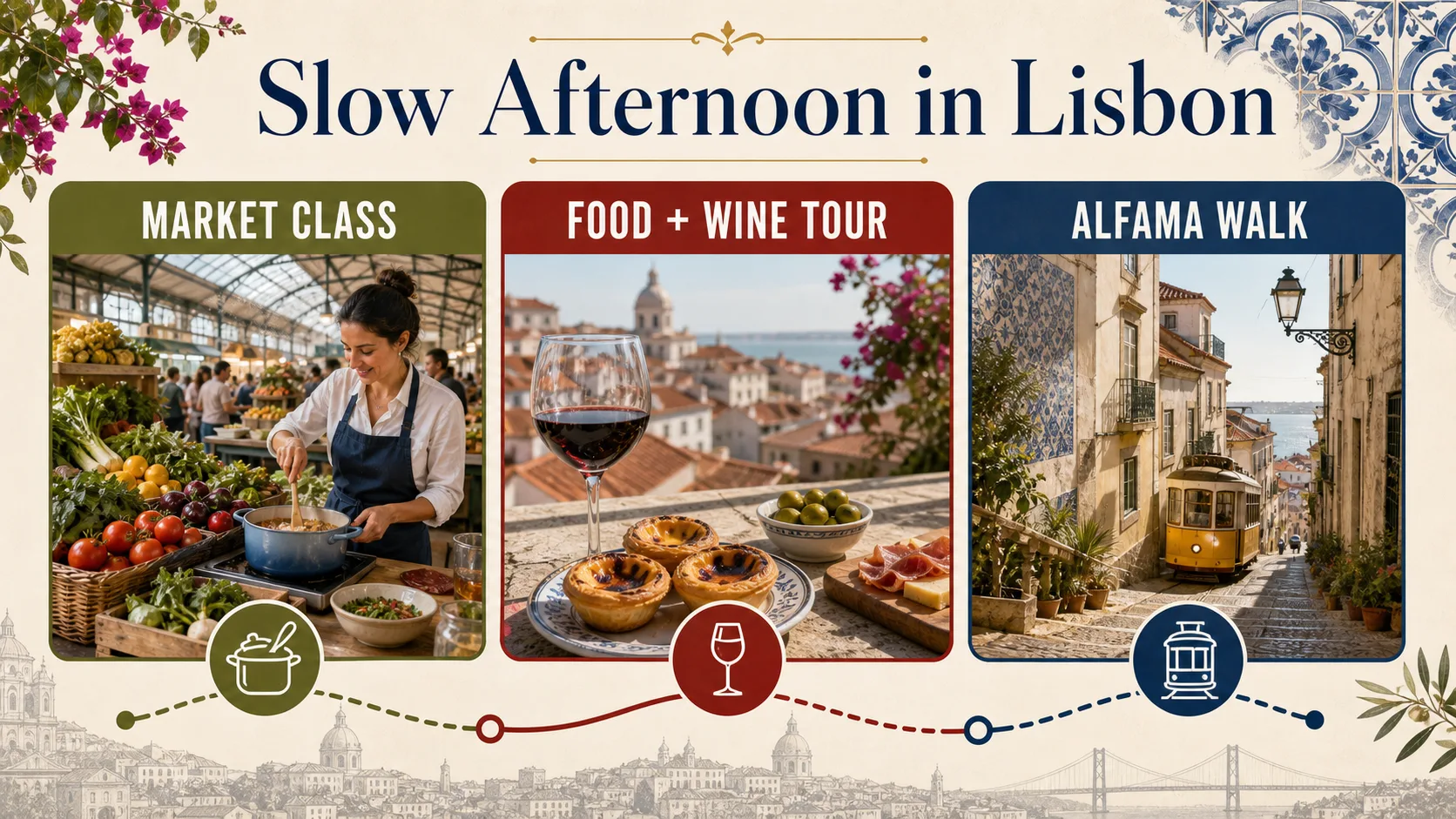
Lisbon is not a city that rewards forcing the afternoon. A market cooking class gives the day a hands-on center; a food and wine tour makes the city social; an Alfama walk works when you need texture without a heavy meal.
- Do not turn a Lisbon afternoon into a checklist of viewpoints, trams, and snacks.
- Choose a market cooking class when you want ingredients, a hosted table, and a slower meal-centered memory.
- Choose a food and wine tour when you want social energy, several tastes, and a route that keeps the evening open.
The smarter Lisbon keyword is a slow afternoon
Portugal's travel demand remains strong enough that broad searches are crowded. Turismo de Portugal's 2025 overview reports 32.5 million guests, 82.1 million overnight stays, and tourism receipts of 29.1 billion euros, up 5.0% from 2024.
That makes a generic Lisbon itinerary a hard fight. The better opportunity is narrower and more useful: travelers who already want Lisbon, but need help choosing one paid food experience that will not consume the whole day.
Lisbon is a natural fit for this because the city is tactile before it is grand. Visit Lisboa's official gastronomy guide points visitors toward pasteis de nata, fish, seafood, bacalhau, sardines, bifanas, and local sweets. The question is not whether to eat. It is whether the afternoon should teach, wander, or simply open the evening.
Choose a market cooking class when the day needs a center
A Lisbon market cooking class is the strongest choice when the afternoon needs a real anchor. The market layer turns ingredients into context, and the cooking layer turns that context into a meal.
This works well if the morning was all hills, viewpoints, and photos. A class lets the city come back to your hands: tomatoes, olive oil, fish, bread, herbs, pastry, wine, timing, and the quiet repetition of learning a dish instead of just ordering one.
The tradeoff is commitment. A class can take over the afternoon, which is useful when you want calm and risky when you still expect to cover three neighborhoods before dinner. Choose this when you want the meal to be the memory.
Choose a food and wine tour when you want social movement
A Lisbon food and wine tour fits a different mood. It gives you several tastes, local wine context, and a guided route without asking you to stand at a stove. That makes it better for groups, couples who want conversation, or travelers who arrived with enough energy to walk.
This is also the better choice if dinner is not fixed yet. A progressive food and wine route can make the evening feel naturally planned, especially if it stays compact and does not chase every famous bite.
The caution is pacing. Lisbon's hills can make a simple route feel larger than it looks, and wine can make the next tram or viewpoint less appealing. A good food tour should make the city softer, not blurrier.
Choose Alfama when food should stay lighter
Sometimes the answer is not a class or a tasting tour. It is an Alfama walk, a cafe stop, a small plate, and enough room to let Lisbon stay visual.
That choice makes sense when the morning was heavy, the weather is hot, or dinner matters later. Alfama gives texture without demanding that the whole afternoon become a meal: stairs, tiles, narrow lanes, river glimpses, and a slower sense of where the city holds sound and shade.
This is where Learncation OK's fit-first logic matters. If you want technique, take the class. If you want social taste, take the tour. If you want atmosphere and less structure, walk Alfama and save the deeper food experience for tomorrow.
Lisbon Afternoon Food Choices That Hold Together
These notes are for itinerary judgment, not fixed operating hours. Turismo de Portugal, Visit Lisboa, and live Learncation OK links were checked on May 6, 2026, but class schedules, market hours, wine routes, heat, hills, holidays, and meeting points change often, so confirm same-day details before building the afternoon around one slot.
Market tour, cooking class, and lunch at Mercado de Arroios
Authentic food and wine tour with a winemaker
Progressive dinner and wine tour
Old Town Alfama walk
Common Questions
A few direct answers for planning the page in real life.
Is a Lisbon cooking class worth it?
Yes, especially when the class begins with a market or ingredient layer. A Lisbon cooking class gives the afternoon a clear center, helps you understand local food beyond ordering, and often ends with a meal that removes dinner pressure.
Should I book a Lisbon food tour or cooking class?
Book a cooking class if you want a slower, hands-on afternoon and one hosted meal. Book a Lisbon food tour if you want more movement, several tastes, wine context, and a social route through the city.
What should I do in Lisbon in the afternoon?
Pick one anchor, then stay nearby. A market cooking class, food and wine tour, Alfama walk, ceramics studio, museum, or cafe finish works better than crossing the city repeatedly between lunch and dinner.
Is a Lisbon wine tour good for first-time visitors?
It can be a strong fit if the route is compact and food-led. A Lisbon wine tour works best when it helps you understand Portuguese wines alongside local snacks, not when it turns the afternoon into a long crawl.