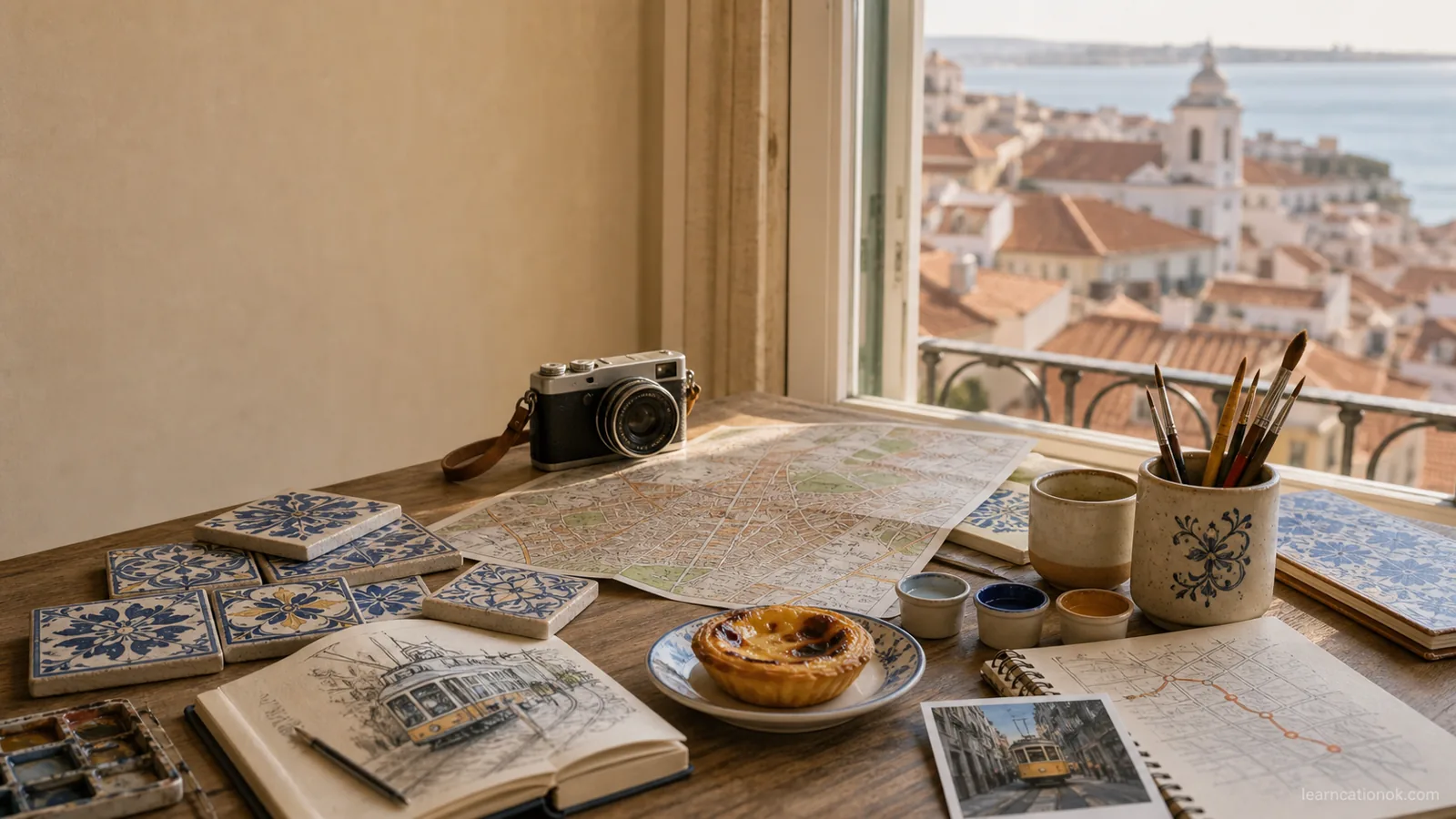
Lisbon can make every pretty idea feel easy: tiles, hills, trams, viewpoints, pastry, river light. The better afternoon starts by deciding whether your body wants a table, a walk, or a soft visual route.
- Choose a tile workshop when Lisbon should become tactile, seated, and easier to remember than another viewpoint.
- Choose a walking tour when the city still feels vertical, confusing, or too pretty to understand on your own.
- Keep one rest layer nearby. Lisbon's hills can turn a creative plan into a stamina test if every idea becomes a route.
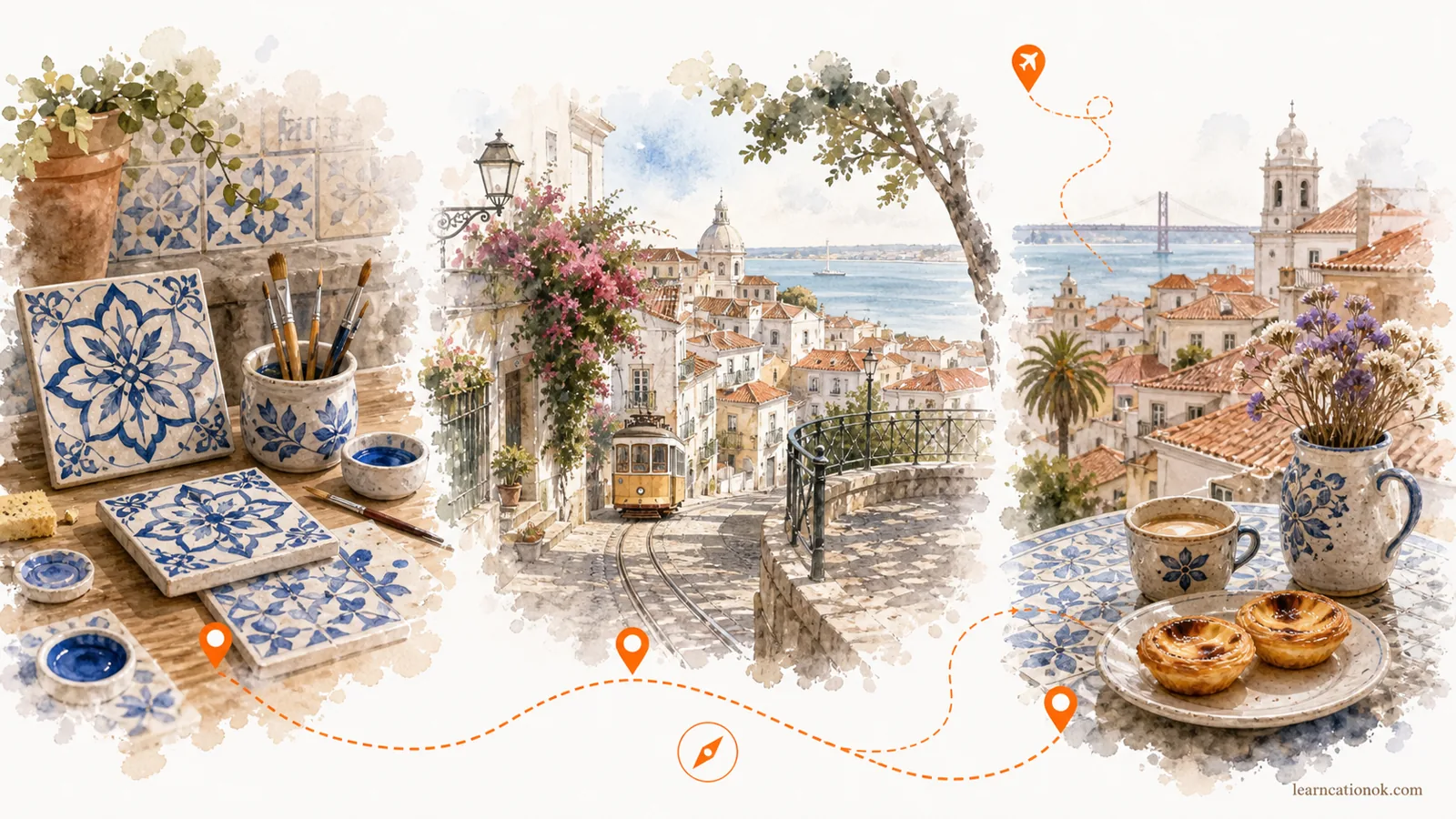
Lisbon is beautiful enough to blur the choice
Lisbon's problem is not a lack of good options. It is that the options all look compatible. A tile workshop, Alfama walk, tram photo, viewpoint, pastel de nata, and river sunset can all seem like one gentle afternoon.
On the ground, Lisbon adds slope, cobblestones, heat, stairs, and route friction. A creative day can become a walking day before you notice.
The Learncation OK decision is simple: choose the main mode first. Table, walk, or visual route. Then add one rest layer, not a second itinerary.
Choose tile when the souvenir should be skill, not shopping
Visit Lisboa's National Tile Museum material is useful because it points to azulejo as more than decoration. Tiles are one of Lisbon's strongest visual systems: pattern, blue, glaze, repetition, domestic walls, church walls, station walls, and everyday city texture.
If you want that system to become personal, choose a tile workshop or azulejo painting studio. The value is not only the finished tile. It is the act of slowing the city down to color, brush, pressure, and pattern.
This is especially good when walking has already done enough. A table can make Lisbon feel deeper without asking your knees for another hill.
Choose a walking tour when Lisbon still feels vertical and unreadable
Alfama is one of Lisbon's strongest first walking choices because it gives the city old-neighborhood texture quickly. Visit Lisboa frames Alfama through narrow streets, viewpoints, and historic layers, which makes it useful when you need context.
But a walking tour should solve a problem. If you already understand the neighborhood and only want one clear memory, a workshop may be stronger. If the city still feels like a maze of pretty slopes, a short guided walk can make the next day easier.
The best Lisbon walk is not the longest. It is the one that helps you stop wandering randomly.
Use photo or sketch when the day wants movement but not coverage
A photo walk or sketch route sits between workshop and tour. You still move, but the movement has a visual task. Light, tram lines, tile facades, balcony shadows, and river breaks become the assignment.
This is better than a broad highlights walk when you want Lisbon to sharpen your attention rather than increase your step count.
Use this option if you have enough energy for streets but not enough appetite for a lecture, a long route, or another must-see list.
Make the rest layer non-negotiable
A slow Lisbon afternoon needs an ending that does not expand. After tile, take pastry or coffee nearby. After Alfama, stop at a viewpoint and leave. After photo walking, do not add a second neighborhood just because the light is good.
This is where Maybe List helps. Save Belem, another ceramics session, or a dinner route for tomorrow. Lisbon rewards return energy more than one overloaded afternoon.
The good version is one tactile memory, one readable route, or one visual habit you can carry into the rest of the trip.
5 Lisbon Slow Creative Afternoon Anchors
These are planning anchors, not fixed operating details. Official Lisbon sources and live Learncation OK links were checked on June 10, 2026, but museum access, renovation status, workshop schedules, walking distance, weather, hills, transit, and meeting points can change. Confirm current details before building the day around one stop.
1. Portuguese Tile Workshop
2. Lisbon Azulejo Painting Studio
3. Old Town Alfama Walk
4. Belem Sunset Photography Walk
5. Lisbon Ceramics and Wine Afternoon
Common Questions
A few direct answers for planning the page in real life.
Should I choose a tile workshop or walking tour in Lisbon?
Choose a tile workshop if you want hands-on focus, azulejo pattern logic, and a portable memory. Choose a walking tour if Lisbon still feels hard to read, especially around Alfama, viewpoints, and steep old streets. The best choice depends on whether your afternoon needs stillness or orientation.
What is an azulejo workshop in Lisbon?
An azulejo workshop is a hands-on tile-painting or tile-design class inspired by Portugal's ceramic tile tradition. It is useful for travelers who want Lisbon's visual language through color, pattern, and making rather than only through photos.
Is a Lisbon walking tour good for tired travelers?
It can be, but only if it is short, focused, and honest about Lisbon's hills. A two-hour Alfama walk or photo route can help with orientation. A long highlights route may be too much if you already need a slow afternoon.
What should I pair with a Lisbon tile workshop?
Pair a tile workshop with one nearby cafe, pastry, viewpoint, or short photo stop. Do not pair it with a full Alfama walk, Belem, a sunset viewpoint, and dinner across town unless your energy is clearly strong.
- Visit Lisboa - National Tile MuseumOfficial Lisbon tourism source checked on June 10, 2026 for azulejo and tile-culture planning context.
- National Tile Museum - Official SiteOfficial museum source checked on June 10, 2026 for live museum context. Travelers should confirm current access before planning around a museum stop.
- Visit Lisboa - AlfamaOfficial Lisbon tourism source checked on June 10, 2026 for Alfama walking and old-neighborhood context.
- Visit Lisboa - Historic NeighbourhoodsOfficial Lisbon tourism source checked on June 10, 2026 for historic-neighborhood planning context and route pacing.