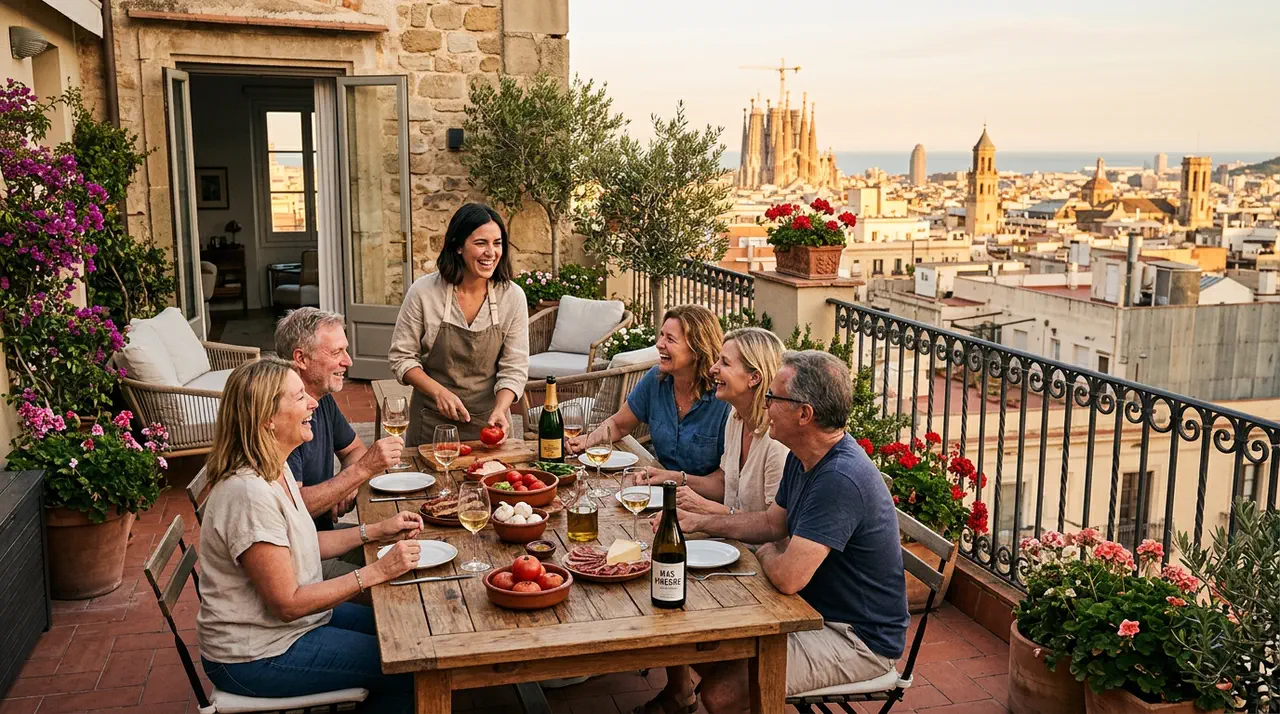
Barcelona is not asking visitors to stop caring about the city. It is asking them to stop treating it like a fast-consumption weekend product. The smarter 2026 plan is one local anchor, one walkable neighborhood, and one experience that pays back in attention, skill, or a better meal.
- Barcelona tourist tax 2026 makes the trip math more visible, so the day should feel worth the added cost.
- Do not answer overtourism pressure with a louder checklist of the same crowded icons.
- Choose food, design, sketching, architecture, or neighborhood experiences that keep the spending and attention closer to the city.
The current issue is not only the tax
Barcelona tourist tax 2026 is getting attention because the price change is easy to understand. Travel-industry coverage reported that from April 1, 2026, the total tourist tax in Barcelona rose to EUR12 per person per night in five-star hotels, EUR8.40 in four-star hotels, and EUR9.50 in tourist accommodation.
But the tax is only the visible part of a larger travel question. The city is also moving to not renew around 10,000 tourist flat licences that expire in 2028, and official visitor guidance asks tourists to plan responsibly, respect residents, and choose local services.
So the useful article is not a complaint about fees. It is a practical filter: if Barcelona now costs more and faces more pressure, what kind of day still deserves the trip?
A low-impact Barcelona day needs one local anchor
A better Barcelona 2026 itinerary starts with one anchor that makes the city more legible. That can be a Catalan market rice class, a vermouth tasting, a poster or tile workshop, a sketch walk, or a small architecture route.
The point is not to perform ethical travel perfectly. The point is to stop turning the day into a series of crowded extractions: one photo, one snack, one monument, one taxi, one more rush across town.
When the main booking is local, hosted, and specific, the rest of the day can become lighter. You need fewer stops because the city has already given you context.
Food works when it stays neighborhood-sized
Food is the easiest way to make Barcelona feel worth the cost, but it works best when it has discipline. A market rice class or small cooking table gives you ingredients, timing, and a host who can explain why simple Catalan food is not simple by accident.
This is stronger than drifting through Boqueria-style crowd pressure with no plan. Choose Sant Antoni, Poble-sec, Eixample, Gracia, El Born, or Poblenou as a real area for the day, then keep walking distances sensible.
The test is simple: after the meal, could you explain one ingredient, one neighborhood habit, or one local rhythm better than before? If yes, the experience did more than feed you.
Design and architecture are the 2026 advantage
Barcelona has always been an architecture city, but 2026 gives that fact a current reason. Tourism of Barcelona describes Barcelona 2026 World Capital of Architecture as running from February 12 to December 13, 2026, with more than 1,500 activities across all ten districts.
That is why a design-led day is unusually timely now. A tile color study, poster printing session, courtyard sketch walk, or architecture ranking route fits the year better than treating Gaudi as the only visual language in town.
This also helps with overtourism pressure. Instead of crowding the same few icons at the same few hours, you can use architecture as a way to notice streets, thresholds, markets, courtyards, ceramics, balconies, and public space.
The smarter answer is fewer, better decisions
Responsible travel in Barcelona does not need to become joyless. It just needs editing. Choose legal accommodation, read the tourist tax before you arrive, keep residential areas quiet, and avoid building the whole day around viral crowd points.
Then spend the day on one meaningful paid experience, one walkable neighborhood, and one calm finish. That could be a cooking class and a Gracia walk, a print studio and Eixample facades, a vermouth tasting and Poble-sec, or a sketch route that ends near the sea.
The Learncation OK version of Barcelona is not smaller because it is timid. It is smaller because the city gets better when you stop trying to take all of it at once.
Barcelona 2026 Choices That Feel Worth the Trip
These notes are for itinerary judgment, not fixed operating hours. Barcelona tax, accommodation, responsible tourism, architecture-year sources, and live Learncation OK links were checked on May 9, 2026, but rates, policies, event dates, tour availability, market hours, and meeting points can change. Confirm current details before building the day around one booking.
Catalan Market Rice Table
Barcelona Graphic Tile Poster
Barcelona Courtyard Sketch Walk
Barcelona Bitter Vermouth Bench
Barcelona Shadow Photo Walk
Common Questions
A few direct answers for planning the page in real life.
Is Barcelona still worth visiting in 2026 with the tourist tax increase?
Yes, if the trip is planned with more care. Barcelona is still one of Europe's strongest cities for food, design, architecture, and social experiences, but the 2026 tax and overtourism debate make a generic landmark sprint feel weaker. Choose one local experience and one walkable area instead of chasing every famous sight.
What is the best low-impact thing to do in Barcelona in 2026?
A small cooking class, market-led food experience, design workshop, sketch walk, or architecture-focused route is usually stronger than another crowded landmark queue. The best choice keeps the day compact, supports local hosts or small businesses, and gives you a clearer read on one neighborhood.
How should tourists respond to Barcelona overtourism concerns?
Stay in legal accommodation, keep noise low in residential areas, use public transport or walk, book fewer but better experiences, avoid treating local markets as props, and spend money with guides, studios, restaurants, and shops that are rooted in the city.
Why is Barcelona architecture especially relevant in 2026?
Barcelona is UNESCO-UIA World Capital of Architecture in 2026, with architecture and urbanism programming across the year. That makes design-led walks, sketching routes, and built-environment experiences more timely than a standard Gaudi-only checklist.
- Adept Traveler - Barcelona tourist tax April 2026 updateCurrent April 2026 travel-industry reporting on the increased Barcelona tourist tax rates.
- Barcelona City Council - Tourist establishments taxOfficial city tax page for visitor accommodation tax context.
- Barcelona City Council - Accommodation and tourist flatsOfficial tourism policy source on accommodation regulation and the non-renewal of tourist flat licences expiring in 2028.
- Tourism of Barcelona - Responsible tourism guidelinesOfficial visitor guidance on planning, respecting heritage and residents, local flavours, and lower-impact movement.
- Tourism of Barcelona - Barcelona 2026 World Capital of ArchitectureOfficial visitor-facing source for the 2026 architecture-year programme.
- UNESCO - Barcelona named World Capital of Architecture for 2026UNESCO source for the UNESCO-UIA designation.