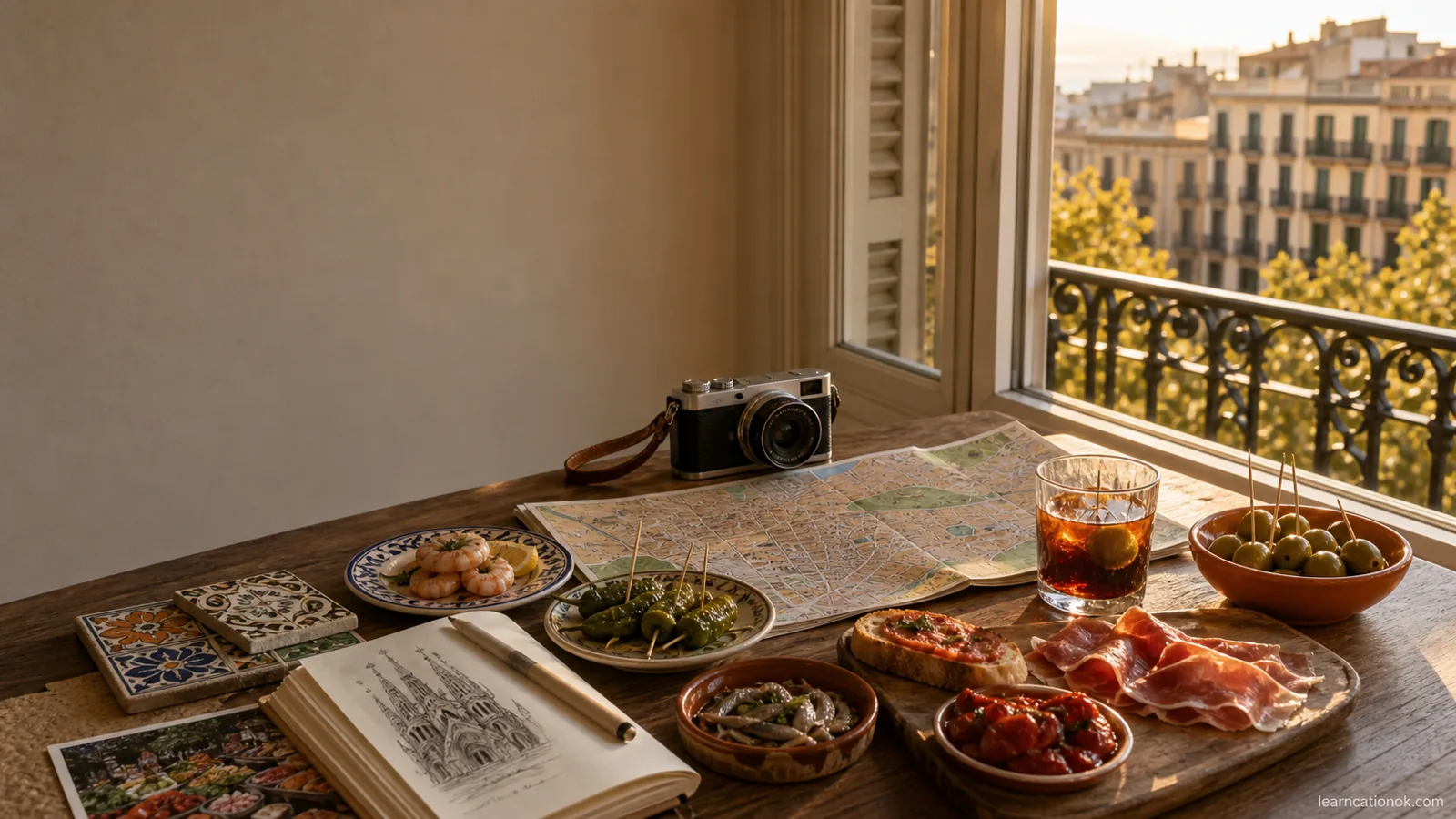
Barcelona is easy to overread as a food city and an architecture city at the same time. The first experience should not try to prove both. It should give the day one clear rhythm.
- Choose a tapas-style experience when you want social taste, lighter commitment, and a first read on the city.
- Choose a cooking class when you want ingredients, technique, and a food memory that feels earned.
- Add mosaic or sketching only when the day has enough attention for design after food, not as another checklist stop.
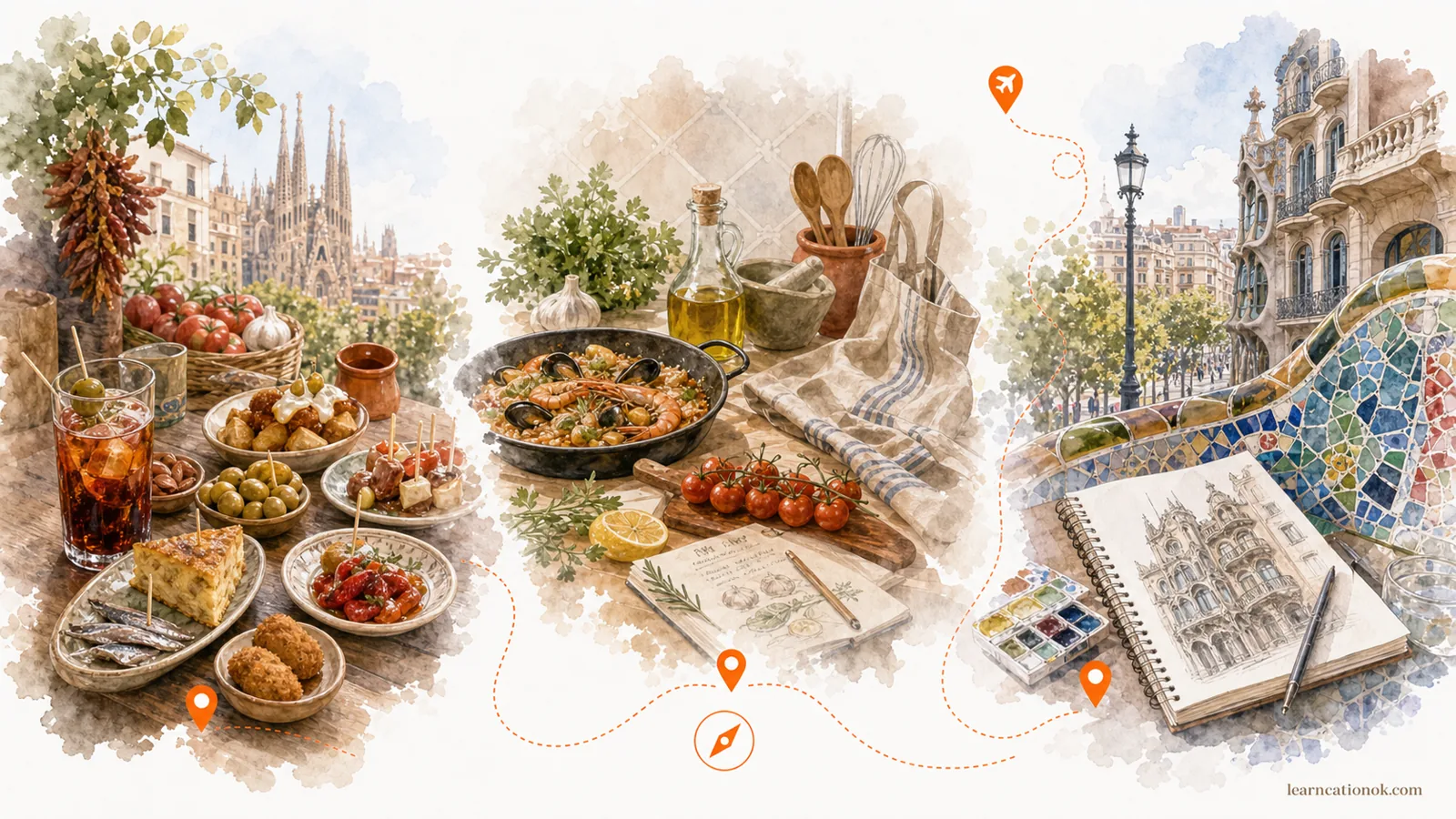
Barcelona food planning needs a smaller first question
Barcelona can make a first food decision feel bigger than it is. Tapas, vermouth, markets, seafood rice, modernist tiles, Gothic streets, and Gaudi architecture all compete for the same afternoon.
The useful question is not what is best in Barcelona. The useful question is what kind of first food experience will make the rest of the city easier to read.
If the day is arrival-heavy, choose lighter taste and conversation. If the body is settled and hungry, choose a cooking table. If food already has enough structure, add one design-led layer instead of another meal.
Choose tapas when the day needs social motion
A tapas or vermouth format is strongest when you want Barcelona to feel open quickly. It gives appetite, host context, and neighborhood movement without asking you to commit to a long kitchen block.
This is useful after check-in, on a first evening, or when you want to learn how small plates, vermouth, market habits, and social pacing work together.
The risk is surface-level grazing. A good tapas decision should leave you with food vocabulary you can use tomorrow, not just a full camera roll and no better sense of how to eat in the city.
Choose cooking when ingredients need to become memory
A cooking class is better when passive tasting feels too thin. La Boqueria is useful as a planning reference because it keeps Barcelona food connected to ingredients, seasonality, vendors, and market attention.
The class should become the main anchor, not one stop between too many famous places. Cooking takes time, appetite, and focus. Treat it as the Learn part of the day, then let the Rest part stay close.
This is the right choice if you want a dish, a technique, and a more grounded food memory than a route can give.
Use mosaic or sketching when the food question becomes design
Barcelona's food decision often turns into a visual decision. The city pulls attention toward balconies, tile, curves, light, facades, and color. That can be useful if you add design deliberately.
Park Guell and Barcelona's 2026 architecture-year context make the design layer timely, but it still needs editing. A mosaic workshop or sketch walk can hold the architecture impulse better than rushing between ticketed sites.
Choose this route when you want the day to move from taste to shape: vermouth first, then mosaic; market food first, then sketching; cooking first, then only a short facade walk.
Keep the first Barcelona food day local, not maximal
Responsible tourism guidance matters here because Barcelona is not a neutral backdrop. A first food experience should not turn residential streets, markets, and crowded monuments into a personal content route.
Choose one neighborhood, one hosted table, and one optional design layer. If the day starts in El Born, stay near El Born. If it starts near Eixample, make the sketch or facade layer nearby. If it starts with a market class, keep the rest of the day simple.
The strongest first Barcelona food day ends with one clear taste and one clear city shape. Everything else can go to Maybe List.
5 Barcelona First Food Experience Choices
These are planning anchors, not fixed operating details. Official Barcelona sources and live Learncation OK links were checked on June 9, 2026, but market access, ticketing, class schedules, route crowding, weather, and meeting points can change. Confirm current details before building the day around one stop.
1. Barcelona Vermouth and Tapas Lab
2. Barcelona Market Fish Rice
3. Modernist Mosaic Workshop
4. Barcelona Sketch Walk
5. Barcelona Bitter Vermouth Bench
Common Questions
A few direct answers for planning the page in real life.
Should I choose a tapas tour or cooking class in Barcelona?
Choose a tapas tour if you want a social, lighter, neighborhood-led first food experience. Choose a cooking class if you want hands-on learning, market logic, technique, and a stronger meal anchor. The better choice depends on appetite, walking tolerance, and how much structure you want.
Is a Barcelona cooking class worth it for first-time visitors?
Yes, when you want Barcelona to become more readable through ingredients and method rather than only through famous streets. A cooking class is strongest when it is the main anchor of the half-day and the rest of the route stays simple.
Are tapas tours in Barcelona too touristy?
They can be if the route is only about quantity or famous bars. They work better when the host explains vermouth, small-plate rhythm, market habits, and neighborhood context. The goal is not to eat everything. It is to understand one food logic well enough to use later.
What should I pair with a first Barcelona food experience?
Pair food with one nearby design layer: a short mosaic workshop, a sketch walk, a facade-focused route, or a quiet terrace. Do not combine a long cooking class, major Gaudi ticket, market route, beach, and nightlife in the same day.
- La Boqueria Market - Official SiteOfficial market source checked on June 9, 2026 for Barcelona market and food-context planning.
- Park Guell - Official SiteOfficial Park Guell source checked on June 9, 2026 for Barcelona mosaic, modernist, ticketed-site, and route-friction context.
- Tourism of Barcelona - Barcelona 2026 World Capital of ArchitectureOfficial tourism source checked on June 9, 2026 for the 2026 architecture-year context that supports design-led Barcelona choices.
- Tourism of Barcelona - Responsible Tourism GuidelinesOfficial tourism source checked on June 9, 2026 for responsible visitor behavior and lower-impact planning context.