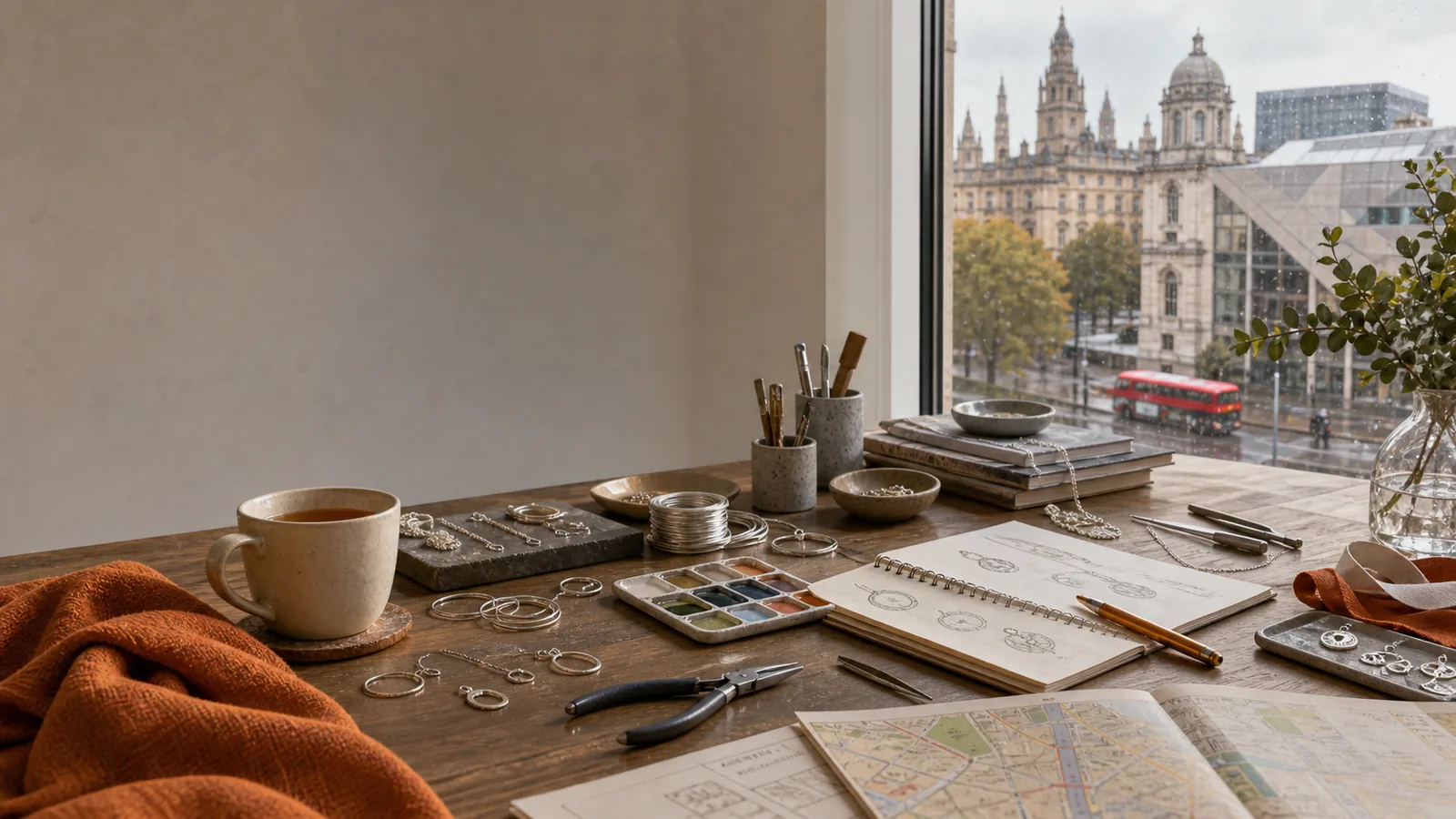
London can turn a creative afternoon into too many good options: V&A rooms, the Design Museum, Tate Modern, craft studios, jewellery benches, drawing classes, tea, and a river walk. The useful question is not what is best. It is whether you need to make something, look closely, or reset.
- Choose a jewellery workshop when the day needs hand-focus, a finished object, and a smaller London memory.
- Choose V&A, Design Museum, Tate Modern, or a gallery route when you want context before committing to a hands-on class.
- Keep the reset close. South Kensington, South Bank, or Somerset House can finish the afternoon without turning London into another transit puzzle.
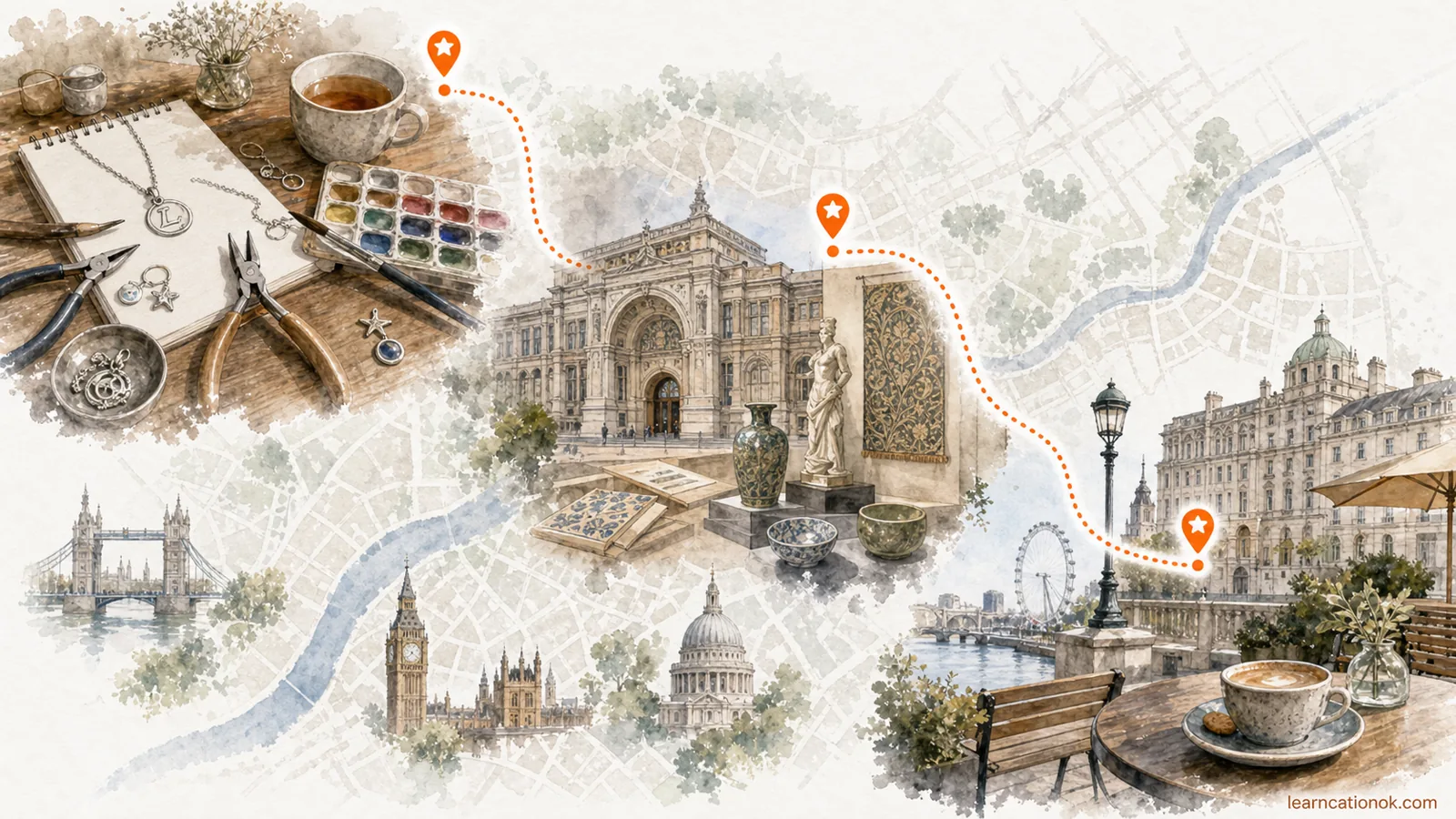
London gives creative travelers too many doors
London is not short on culture. That is the problem. A visitor can start with the V&A, add the Design Museum, cross to Tate Modern, notice a drawing class, find a jewellery workshop, and still feel that the afternoon never chose a shape.
For Learncation OK, the better London question is narrower: do you want to make, study, or reset? A jewellery workshop solves scattered attention. A museum or gallery route gives vocabulary. A soft stop keeps the city from becoming only movement.
This guide is for a calm creative afternoon, not a London culture marathon. Pick one anchor and let the rest support it.
Choose a jewellery workshop when the day needs hand-focus
A jewellery workshop is the strongest choice when you want London to become small enough to hold. Silver, enamel, wire, glass, charm, texture, and finishing details create a clear task. That can be useful in a city where every neighborhood competes for attention.
This choice fits solo travelers, couples, rainy afternoons, and anyone who wants a finished object instead of another set of museum photos. It also works when you have already seen major London sights and need one specific creative memory.
Before booking, check how technical the session is, whether the piece is completed during class, whether beginners are welcome, and whether the studio sits near your next meal or rest stop. A beautiful class across town can still be the wrong choice if the transfer breaks the day.
Choose the V&A or Design Museum when you need context first
The V&A is useful because it makes design feel broad: fashion, textiles, objects, interiors, sculpture, photography, and material history can all sit in one visit. The Design Museum is more direct if your question is contemporary design, product thinking, graphics, architecture, or how objects communicate.
A museum-first afternoon is better when you are not ready to commit to a class or when the group has mixed energy. You can look, compare, sketch a few details, and leave before the visit becomes another museum endurance test.
The risk is over-browsing. Give the visit a rule: choose one material, one object type, or one design question. Otherwise London will keep offering rooms long after your attention has ended.
Use drawing, photography, or glass when jewellery feels too narrow
Not every creative traveler wants a charm or ring. Drawing, photography, and glass can be better bridges between moving through London and learning something specific.
A beginner drawing class works when you want studio guidance without needing a wearable result. A photography course works when London itself is the material. A lampwork or glass session works when you want heat, color, and object-making without the fashion association of jewellery.
These are also useful alternatives if museum rooms feel too passive. You still learn by looking, but the looking has a task.
End near the route instead of crossing London again
London punishes overconfident transfers. A creative afternoon should end near the anchor whenever possible. South Kensington can hold V&A, the Design Museum direction, cafes, and an easy museum-side pause. South Bank can hold Tate Modern, river air, sketching, and a lighter walk.
Somerset House is useful as a central reset because the courtyard and creative-programming context let the day stay cultural without adding another major institution.
If you booked a workshop, let tea or a short walk be enough. If you chose the museum, let one sketch, one photo rule, or one quiet stop turn the visit into a memory rather than a list.
5 London Creative Afternoon Anchors
These are planning anchors, not fixed operating details. Official London museum, gallery, craft, and institution sources plus live Learncation OK links were checked on June 17, 2026, but opening hours, workshop availability, language support, finished-object rules, weather, transport, and meeting points can change. Confirm current details before building the afternoon around one stop.
1. Filigree Jewellery Workshop
2. Enamel Jewellery Making Class
3. Lampwork Glass Workshop
4. Beginner Drawing Class at Art Academy
5. Private London Travel Photography Course
Common Questions
A few direct answers for planning the page in real life.
Should I book a London jewellery workshop or visit a design museum?
Book a jewellery workshop if you want a tactile result, a quieter anchor, and a memory you physically make. Visit a design museum or V&A route first if you want broader context, object inspiration, fashion, textiles, interiors, or a lower-commitment creative afternoon. The better choice depends on whether your energy needs focus or browsing.
Is London good for creative workshops?
Yes. London works well for jewellery, enamel, glass, drawing, photography, bookbinding, ceramics, lettering, and other compact creative sessions. It is best when you choose one workshop and one nearby reset instead of trying to cross the city for several creative stops in one day.
What is a calm creative afternoon in London?
A calm creative afternoon in London usually has one main anchor, one context layer, and one reset. For example: jewellery class plus tea, V&A plus a short sketch task, Design Museum plus a quiet cafe, or Tate Modern plus a South Bank walk. The point is to edit, not collect.
What should I check before booking a London jewellery class?
Check duration, group size, language, tool use, whether the piece is finished during class, pickup or shipping rules, accessibility, and the nearest station. Also check whether the class location pairs naturally with your hotel, museum plan, or evening meal.
- V&A South Kensington - Official siteOfficial museum source checked on June 17, 2026 for art, design, fashion, textile, object, and South Kensington planning context.
- V&A - VisitOfficial V&A visitor source checked on June 17, 2026 for live visit-planning context.
- Design Museum - Official siteOfficial museum source checked on June 17, 2026 for London design-museum context.
- Tate Modern - Official siteOfficial museum source checked on June 17, 2026 for South Bank modern-art and gallery-route context.
- National Gallery - Plan your visitOfficial gallery source checked on June 17, 2026 for central London gallery-planning context.
- Somerset House - Official siteOfficial institution source checked on June 17, 2026 for courtyard, creative-programming, and reset context.
- London Craft Week - Official siteOfficial craft-event source checked on June 17, 2026 for London's broader craft and making context.