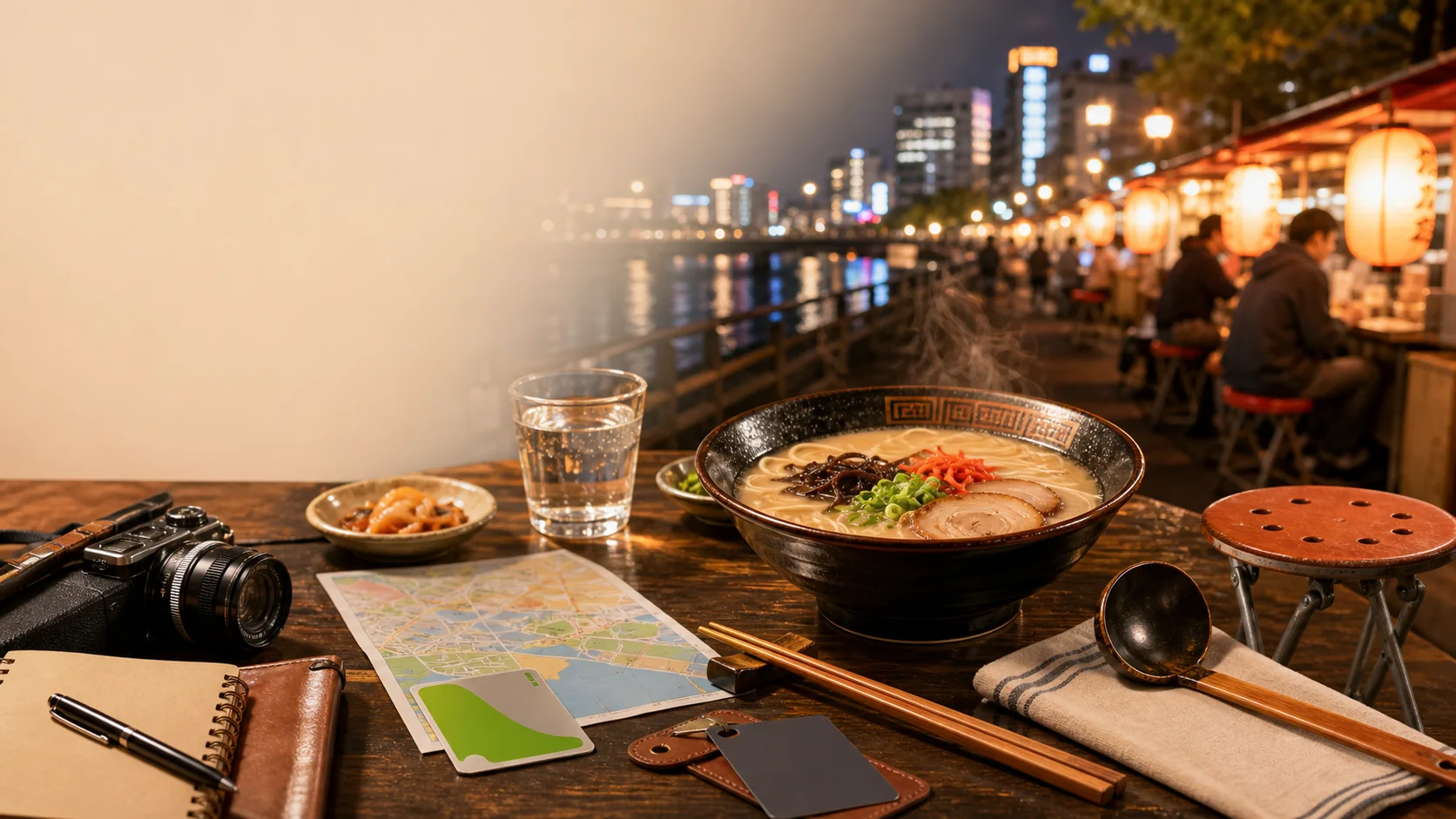
Fukuoka is easy to underestimate because the city feels compact and food-led. That is exactly why the first night needs a decision: do you want to learn one dish properly, or let a yatai counter make the city social?
- A ramen class gives Fukuoka a hands-on center; a yatai food walk gives the first night atmosphere and social proof.
- Tenjin and Nakasu are the easiest yatai areas for first-time visitors, but small counters mean timing and patience matter.
- The better Learn-rest rhythm is one food anchor, one short walk, and one early finish before the first full day.
Fukuoka food planning gets noisy because everything sounds easy
Fukuoka has the kind of food reputation that makes travelers overbuild the first night. Ramen, yatai, mentaiko, gyoza, seafood, coffee, sweets, and casual bars all feel close enough to combine. The city does not look as sprawling as Tokyo or Seoul, so the plan starts to expand before the body has arrived.
That is the first-night trap. A food city does not need a food race. It needs one clear appetite decision: do you want the evening to teach your hands something, or do you want the city to open through a small counter, a bowl, and a lantern-lit walk?
Ramen class if you want technique, yatai walk if you want social texture
A ramen class is the stronger fit when the trip needs a Guided Try. Broth, tare, noodles, toppings, timing, and bowl balance turn Hakata ramen from a famous dish into a system you can understand. It is more deliberate, usually more structured, and better for travelers who want the first night to have a finished learning memory.
A yatai food walk is different. It is not only about the dish in front of you. It is about the smallness of the counter, the rhythm of ordering, the glow of Tenjin or Nakasu, and the feeling that Fukuoka's night culture is built at human scale. It is less controlled, which is exactly why it can feel more like arrival.
Keep the first night smaller than your appetite
Fukuoka's yatai culture is famous enough that it can become a checklist by itself. JNTO points visitors toward Tenjin and Nakasu as the main areas, and the official Fukuoka guides remind travelers to confirm operating details because individual stalls vary. That is a useful planning lesson: the yatai night should stay flexible.
The same is true for a class. If you book a ramen or mentaiko session, let it be the anchor. Do not add a full yatai crawl afterward just because it is nearby. A short walk, one drink, or an early hotel return can make the first full day better.
The social layer is strongest when it does not control the evening
Fukuoka food photographs well: steam, lanterns, broth, counters, narrow stools, small dishes, and river light. But the best proof from a first-night food plan is not a crowded feed. It is one image that reminds you how the city felt before the itinerary became complicated.
That is why the Learncation OK answer is not ramen or yatai in the abstract. It is fit. Choose the option that matches the evening you actually have: a focused table if you need clarity, a small counter route if you need atmosphere, or a softer tea or citrus stop if the arrival day has already spent your attention.
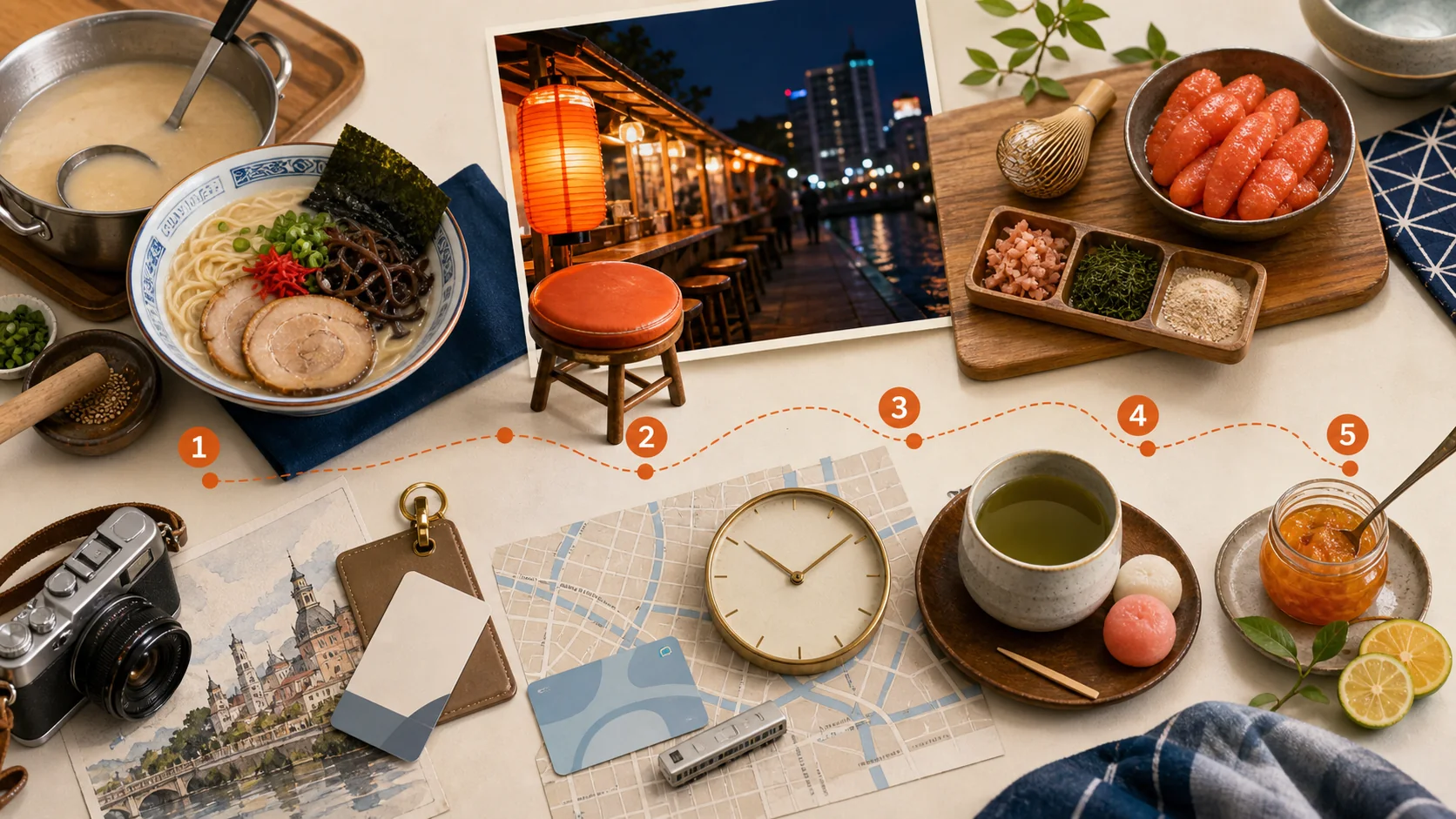
5 Fukuoka Food Anchors for a First Night
These are planning anchors, not fixed operating details. Official Fukuoka/JNTO sources were checked on May 17, 2026, but yatai hours, stall locations, menus, class schedules, meeting points, weather, and transit can change. Confirm live details before building the night around one stop.
1. Hakata Tonkotsu Broth Table
2. Yatai Small Plates Primer
3. Mentaiko Cooking Bench
4. Fukuoka Tea Sweet Pairing
5. Kyushu Citrus Jam Lab
Common Questions
A few direct answers for planning the page in real life.
Should I choose a ramen class or a yatai food walk in Fukuoka?
Choose a ramen class if you want technique, broth context, and a seated Guided Try. Choose a yatai food walk if you want atmosphere, small-counter conversation, and a lighter first-night route. The best choice depends on arrival energy, appetite, language comfort, and whether you want to make something or read the city through eating.
Are Fukuoka yatai good for first-time visitors?
Yes, especially around Tenjin and Nakasu, where visitors can understand the yatai culture quickly. The tradeoff is that stalls are small, seating is limited, menus vary, and operating details can change, so keep the first-night plan flexible.
What food is Fukuoka known for on a first trip?
Fukuoka is strongly associated with Hakata-style tonkotsu ramen, yatai food stalls, mentaiko, seafood, gyoza, and casual night eating. For Learncation OK, the best first-night plan is not to try everything; it is to choose one food anchor that makes the city easier to understand.
What is a low-pressure first-night food plan in Fukuoka?
Use one food anchor, then stop. A ramen broth table, yatai small-plates route, mentaiko cooking bench, tea and sweets pairing, or citrus pantry class can all work. Avoid stacking a class, yatai, and a second bar route unless you have already settled into the city.
- Fukuoka City Official Tourist Guide - YataiOfficial Fukuoka city visitor source used for yatai area framing, etiquette, and first-time visitor context.
- JNTO - Fukuoka Yatai Food StallsJapan National Tourism Organization source used for Tenjin and Nakasu yatai concentration and access context.
- VISIT FUKUOKA - Yatai Food StallsFukuoka Prefecture official travel guide source used for yatai bar-hopping context and operating-detail caution.