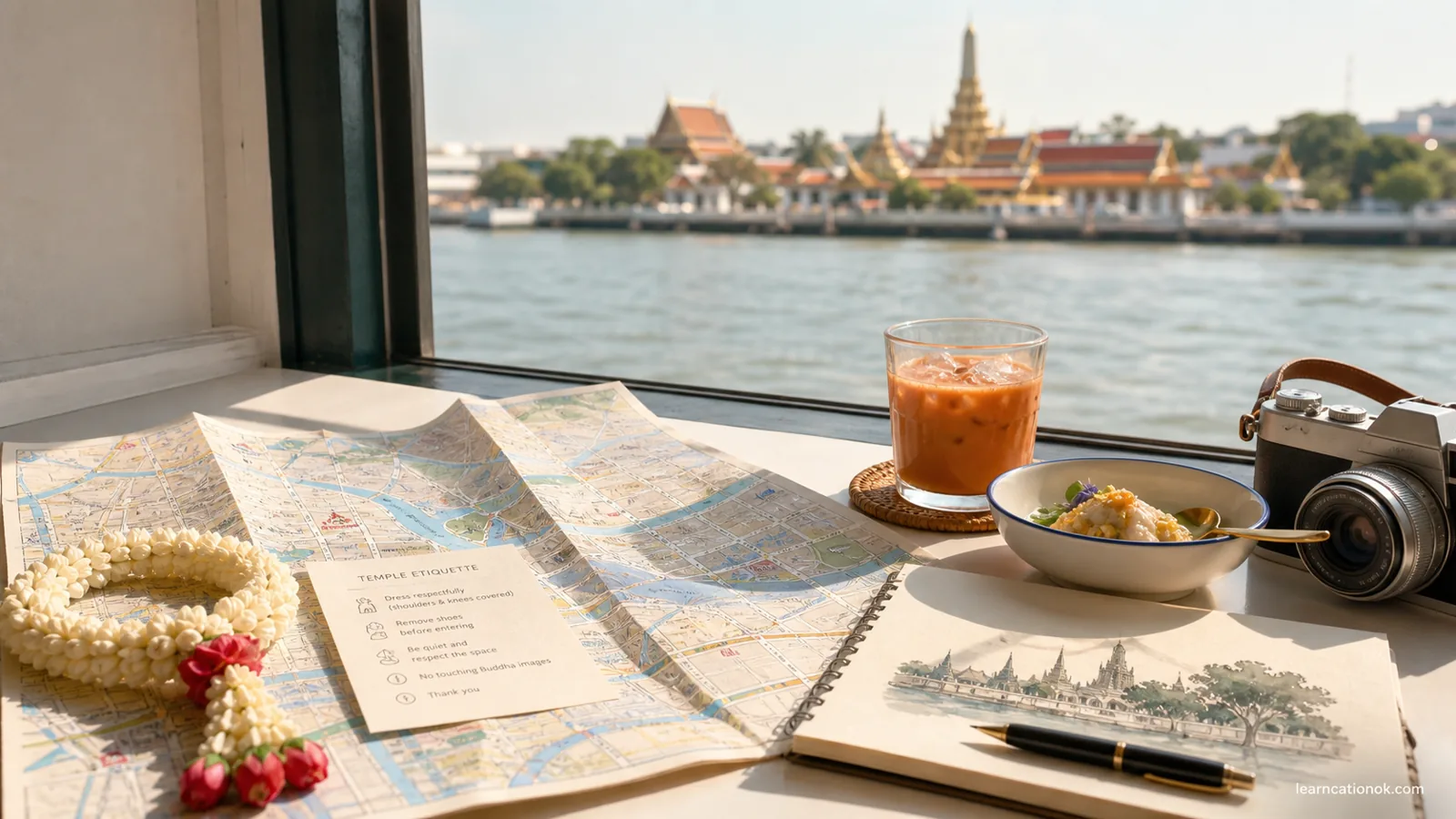
Bangkok can make a first-time visitor feel behind before the day starts. This guide is for choosing culture without turning the city into a checklist.
- For a first Bangkok cultural day, choose one major reference point before choosing food, craft, or a river stop.
- The strongest rhythm is temple context, one hands-on or local neighborhood anchor, then a rest reset before evening.
- Save the second temple or night market to Maybe List. Bangkok gets better when the day has fewer transfers.
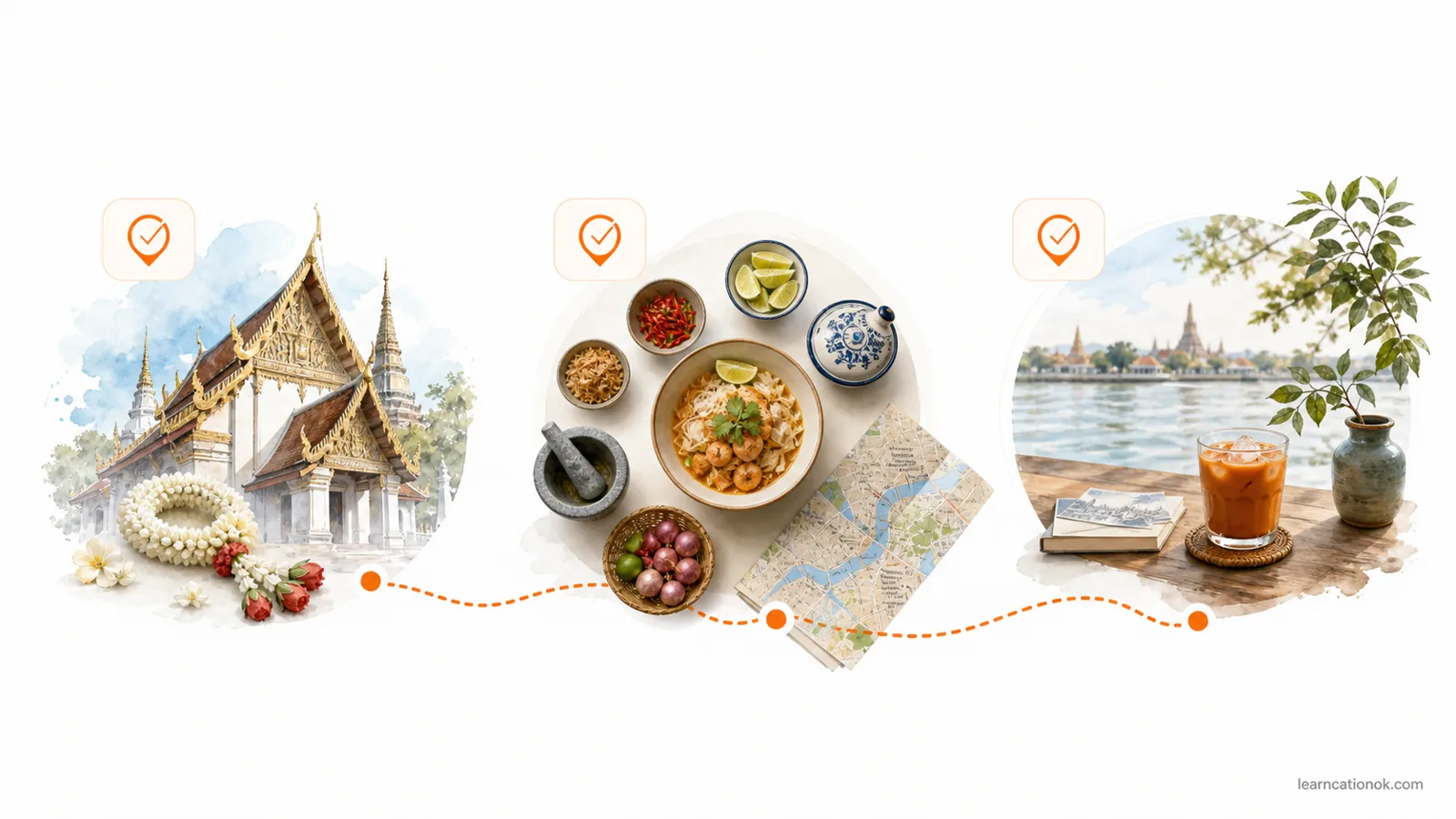
Bangkok culture needs a filter, not more ambition
First-time Bangkok planning often fails because the city sounds easy to layer. A palace in the morning, Wat Pho, Wat Arun, Chinatown, a market, a food class, a canal, a rooftop, and a night street can all feel reasonable when each one is described alone.
Together, they become heat, traffic, dress-code friction, transport decisions, and a day where the traveler is always late to the next good idea. A better first cultural day starts with one anchor that explains the city, then gives the rest of the day room to breathe.
Use temple etiquette as a pacing signal
The Grand Palace and Wat Pho are not casual filler stops. The official Grand Palace information explains access, transport, ticketing, and dress-code expectations, while Wat Pho's visitor guidance asks tourists to dress politely, remove shoes where required, and keep calm and respectful inside temple spaces.
That practical layer is useful. If a stop asks for clothing, quiet attention, shoes off, and a slower body, it should not be squeezed between three other high-friction ideas. Use one temple or palace anchor as the main cultural chapter of the day.
Let a riverside neighborhood make Bangkok feel lived-in
Kudi Chin is a strong second anchor because it gives Bangkok culture without only repeating monument logic. Tourism Authority of Thailand describes it as a historic riverside neighborhood along the Chao Phraya where Thai, Chinese, Portuguese, and Muslim communities have lived side by side for generations.
For Learncation OK, that makes it a useful low-pressure cultural walk. It is not about collecting more famous places. It is about letting the city shift from royal and temple reference points into everyday layers: shrine, church, mosque, dessert, river, and neighborhood pace.
Choose a hands-on table when sightseeing turns passive
If you already have one strong sightseeing anchor, the next experience should change the way you engage. A flower garland table, curry workshop, canal dessert tasting, or simple food learning session gives the day a made object, a technique, or a flavor reference instead of another photo stop.
This is where Bangkok becomes easier to remember. You are not only seeing gold, roofs, river light, and crowds. You are learning how jasmine, chili, coconut, lime, herbs, and ritual objects carry meaning through the city.
Protect evening energy before Bangkok asks for it
Bangkok evenings can be generous, but they are not always gentle. If the day already included palace etiquette, a temple, a river crossing, and a hands-on table, the smarter move is to save the night option instead of proving you can keep going.
Put the extra idea in Maybe List. A first-time Bangkok day is successful when you understand one cultural reference point, feel one lived-in neighborhood or table, and still have enough attention left for tomorrow.
5 First-Time Bangkok Cultural Anchors
These are planning anchors, not fixed operating details. Official sources were checked on June 2, 2026, but opening hours, prices, dress rules, class schedules, traffic, transport, and ceremonies can change. Confirm live details before building the day around one stop.
1. Grand Palace and Wat Phra Kaew Reference Point
2. Wat Pho Slow Temple and Body Reset
3. Kudi Chin Riverside Cultural Walk
4. Flower Garland Making Session
5. Bangkok Spice and Curry Workshop
Common Questions
A few direct answers for planning the page in real life.
What cultural experiences in Bangkok are good for first-time visitors?
Good first-time Bangkok cultural experiences include one palace or temple anchor, Wat Pho or another etiquette-aware temple visit, a Kudi Chin riverside walk, a flower garland session, and a Thai cooking or dessert table. The key is choosing one or two of these, not stacking all of them.
How do I avoid overplanning Bangkok on a first trip?
Start with one reference point, such as the Grand Palace area, Wat Pho, or a guided cultural table. Then add one nearby soft reset. Avoid combining a palace, several temples, a market, a cooking class, a river route, and a night plan in the same day.
Is the Grand Palace enough for a first Bangkok cultural day?
It can be enough as the main morning anchor. The official Grand Palace visitor information includes dress-code, ticket, and transport details, which means it deserves planning space. Pair it with Wat Pho, a river pause, or a quieter neighborhood rather than forcing a full cross-city day.
Should I choose a Bangkok food class or a temple tour first?
Choose a temple or palace tour first if you want cultural orientation. Choose a food class first if you want Bangkok to feel more sensory and structured. Either can work, but the rest of the day should be lighter.
- The Grand Palace - Practical InformationOfficial Grand Palace source checked for visitor access, dress-code, transport, and current practical context.
- Wat Pho - Visit PlanOfficial Wat Pho source checked for temple visit planning, etiquette, and Thai traditional massage context.
- Tourism Authority of Thailand - Wander Through Kudi ChinOfficial Tourism Authority of Thailand article used for Kudi Chin riverside neighborhood and multi-faith cultural context.